Knauf Attic Insulation in San Joaquin Hills: A Homeowner’s Guide
Knauf attic insulation in San Joaquin Hills works best when you match the specific product line to your attic’s construction and your home’s age. Most homes in this area fall into two camps: newer builds with tight envelopes or older ranches built before 2000 that leak air like a colander. Knauf’s EcoFill blown fiberglass runs about $1.10 to $1.60 per square foot installed in San Joaquin Hills, and pairing it with EcoSeal air sealing typically delivers better results in older homes than spray foam at a fraction of the cost. If you’d rather skip the research and get a straight recommendation, call Welcome Insulation at (855) 795-2118 for a free estimate.
What Knauf Product Lines Actually Matter for San Joaquin Hills Attics
Knauf makes a lot of products, but for attic work in San Joaquin Hills, three lines are worth knowing: EcoFill, JetStream, and EcoSeal. They serve different purposes, and confusing them leads to bad purchases.
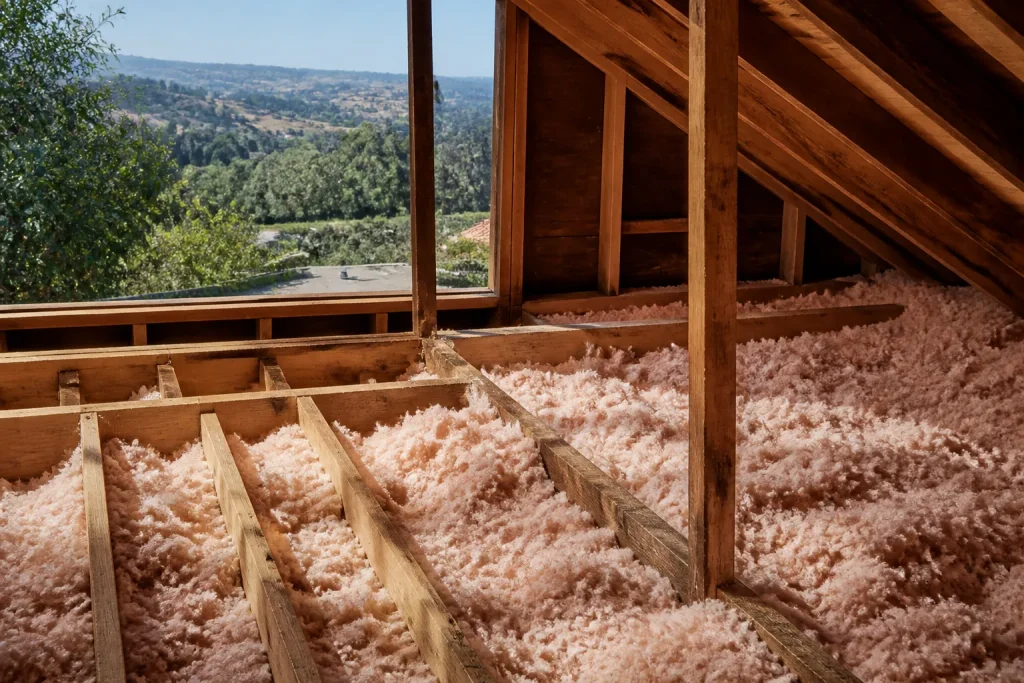
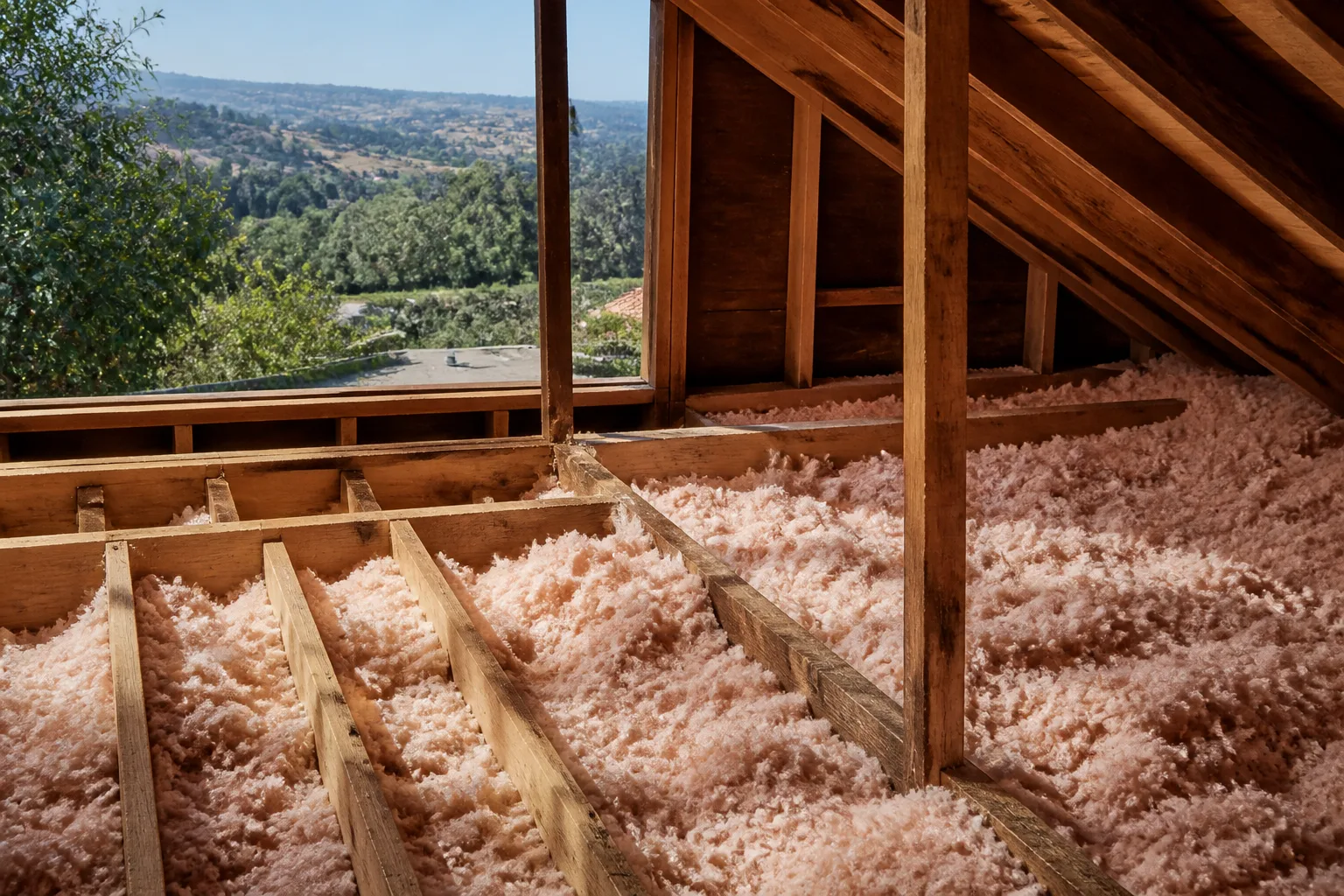
- EcoFill WX is Knauf’s blown-in fiberglass. It’s the workhorse for open attic floors in San Joaquin Hills because it settles less than competing blown fiberglass and can reach R-38 to R-60 depending on depth. The key detail here is that EcoFill’s settled R-value is tested and published, not just its initial installed R-value. In coastal attics that cycle between damp marine air and dry heat, that distinction matters.
- JetStream is also blown fiberglass, but engineered for higher coverage per bag and faster install. It’s a good choice when you’re topping off existing insulation in a San Joaquin Hills home that already has some coverage but has compacted over time.
- EcoSeal isn’t insulation at all. It’s a water-based air sealing product applied to gaps, plumbing penetrations, recessed light housings, and top plates before blown insulation goes in. In our experience, this is the most underused Knauf product in San Joaquin Hills attics.
We stock Knauf alongside Johns Manville and Owens Corning because each has specific strengths. EcoFill’s settled R-value documentation is why we grab Knauf for attics with steep temperature swings, which describes most of San Joaquin Hills. The warm days and cool nights common here cause insulation movement over time, and a product with documented settled performance gives you a more honest picture of what you’ll actually have in year five, not just day one.
Why EcoSeal Plus Blown Insulation Often Beats Spray Foam in Pre-2000 Homes
If your San Joaquin Hills home was built before 2000, here’s a straight answer: Knauf EcoSeal paired with EcoFill blown fiberglass usually costs 40 to 60 percent less than closed-cell spray foam and closes most of the same thermal gaps that drive up your bills. We’re not saying spray foam is a bad product. It’s not. We install it too, and it has a place in specific San Joaquin Hills applications like cathedral ceilings or rim joists. But for a typical vented attic with can lights, wiring penetrations, and a standard truss system, air sealing the penetrations first and then blowing insulation over the top is often the smarter buy.
Here’s why. In older San Joaquin Hills homes, the primary energy leak isn’t the insulation material itself. It’s the bypasses: the gaps around recessed lights, the chases where plumbing vents run through the attic floor, the seams where drywall meets top plates. EcoSeal is designed specifically to seal those gaps. It’s applied as a spray-applied coating that remains flexible and doesn’t crack as the house moves through seasonal changes. Once those leaks are closed, blown fiberglass does what it’s supposed to do: trap air and slow heat transfer.
Spray foam does both jobs at once, which is why it’s priced accordingly. In a pre-2000 San Joaquin Hills home with an accessible attic, you’re often paying a premium for a one-step solution when a two-step approach gets you 90 percent of the performance for half the cost. Ask us why we recommended EcoSeal over spray foam for your attic, and we’ll walk you through the air leakage numbers side by side. That conversation costs you nothing.
How Knauf’s GREENGUARD and Recycled Content Affect Coastal Homes
One detail most insulation guides skip: in tightly built homes near the coast, indoor air quality concerns shift. San Joaquin Hills sits close enough to the ocean that many newer homes are built to tighter air infiltration standards than inland construction. That’s good for energy efficiency, but it also means anything that off-gasses inside your building envelope stays inside longer.
Knauf’s EcoFill and JetStream products carry GREENGUARD Gold certification, which means they’re tested for low chemical emissions, particularly formaldehyde and other volatile organic compounds. The company also uses a significant percentage of recycled glass in its fiberglass production, and that recycled content is verified. For a San Joaquin Hills homeowner with allergies, respiratory sensitivities, or a kid with asthma, that’s not marketing fluff. It’s a measurable difference in what you’re putting above your ceiling.
We also install blown-in cellulose in San Joaquin Hills for homeowners who want an even higher recycled-content story with GreenFiber, and we carry Rockwool when fire resistance and sound control are the top priorities. Knauf occupies a middle position that works well for most coastal homes: strong thermal performance, documented low emissions, and a price point that doesn’t require a second mortgage.
One honest note: fiberglass is fiberglass in some respects. If you compare Knauf’s EcoFill to Johns Manville’s Attic Protector on pure thermal performance, the R-value per inch is nearly identical at roughly 2.5 to 2.7. The differences show up in settled R-value documentation, coverage rates per bag, and the consistency of the glass fiber distribution. In our crews’ experience installing all three major fiberglass brands in San Joaquin Hills attics, Knauf’s blowing consistency is excellent, which means fewer dense spots and fewer thin spots when the machine is running. That matters because an uneven installation wastes whatever R-value you paid for.
Honest Comparison: Where Knauf Wins and Where It Doesn’t Matter
A good insulation specialist tells you when brand choice is meaningful and when it isn’t. Here’s our unvarnished read from installing in San Joaquin Hills attics.
Where Knauf EcoFill has a real edge:
- Settled R-value documentation. Knauf publishes tested settled R-values for their blown fiberglass. Owens Corning and Johns Manville publish installed R-values primarily. In an attic that experiences the temperature cycling common in San Joaquin Hills, settlement is inevitable, and knowing what you’ll have after it happens is useful information.
- Coverage consistency coming out of the blower. Knauf’s glass fiber distribution is among the most consistent we work with. Fewer clumps mean fewer low spots in your attic floor.
- EcoSeal compatibility. When you air seal with EcoSeal and blow EcoFill over it, you’re working within one manufacturer’s tested system rather than mixing products. That’s a small thing, but it eliminates finger-pointing if an issue ever arises.
Where the difference is negligible:
- R-value per inch. All three major fiberglass brands deliver 2.5 to 2.7 R per inch. If someone tries to sell you one brand as dramatically more insulating than another, walk away.
- Fire resistance. All fiberglass is non-combustible. That’s true across brands.
- Moisture resistance. Neither Knauf, Owens Corning, nor Johns Manville blown fiberglass dries well after getting wet. If you have a roof leak in San Joaquin Hills, fix it before insulating, regardless of brand.
We pulled a bag of EcoFill out of a garage in the Newport Ridge area last month that a homeowner had bought a year prior and never installed. The bag had been stored on concrete, absorbed moisture from the floor, and the material was matted and useless. That’s not a Knauf problem. That’s a storage problem. But it’s a good reminder that insulation is a material you want installed promptly and correctly, not sitting in your garage through a coastal winter.
How to Verify the Knauf Product You Paid For Actually Goes In Your Attic
This is the section most manufacturers won’t publish, and it’s exactly what we tell customers who ask how they’ll know they got what they paid for. It’s a fair question. Insulation is the only home improvement product that gets covered up and never seen again, so verification matters.
- Ask for the batch code. Every Knauf bag has a printed batch or lot code on the side. A reputable installer in San Joaquin Hills will have no problem showing you the bags before they go into the machine. Write the code down.
- Check the coverage chart. Knauf publishes coverage charts that specify how many bags are needed per 1,000 square feet to hit a specific R-value. Ask your installer to show you the chart and confirm the bag count for your attic’s square footage at the R-value you agreed to.
- Watch the first ten minutes of installation. If the bags going into the hopper are blank white bags with no manufacturer markings, that’s a red flag. Knauf bags are clearly labeled with the product name and R-value data. Budget or private-label fiberglass often arrives in unmarked bags.
- Verify installed depth after the fact. The right way to check blown insulation is by depth. R-38 roughly equals 15 to 16 inches of settled EcoFill. R-49 pushes toward 19 to 20 inches. Ask for the before and after depth measurements, or check them yourself with a tape measure.
We take photos of every San Joaquin Hills attic we work in, before and after, and we’re glad to walk you through exactly what went in and how much. If an installer gets defensive about any of the checks above, that’s your answer right there.
When to Call a Pro in San Joaquin Hills
Blown insulation looks simple on the surface, but a few things in San Joaquin Hills attics genuinely warrant a specialist. If your attic has recessed light housings that aren’t IC-rated, covering them with insulation creates a fire hazard unless they’re properly baffled or upgraded first. If you have a vented attic with soffit vents, blocking those vents with blown material causes moisture buildup that leads to mold in coastal air. And if your attic has old vermiculite insulation containing asbestos, you should not disturb it yourself. These are real scenarios we see regularly in San Joaquin Hills homes built between 1960 and 1990.
Our attic insulation service in San Joaquin Hills covers all of this: existing insulation removal when needed, air sealing, baffle installation, and the blown material itself. We’re insulation contractors and nothing else, which means our crews are solving attic-specific problems every day, not splitting their weeks between roofing jobs and insulation callbacks.
One last practical note: attic work in San Joaquin Hills is genuinely unpleasant in the summer. Attic temperatures can hit 130 degrees or more. If you’re going to tackle it yourself, do it early morning or after October. If you’d rather not sweat through it, call us. That’s what we’re here for.
The Bottom Line
Knauf’s EcoFill blown fiberglass is a strong, well-documented insulation choice for San Joaquin Hills attics, especially in homes where temperature cycling causes material settlement over time. Pairing EcoFill with Knauf’s EcoSeal air sealing is often the most cost-effective solution for older coastal homes that lose energy through gaps and penetrations rather than lack of insulation depth. Knauf’s GREENGUARD certification and recycled content are legitimate considerations for tightly built coastal homes where indoor air quality carries more weight than it does in leaky inland construction. And when you’re comparing brands, the honest truth is that most of the difference is in documentation, installation consistency, and the air sealing system you pair it with, not in R-value per inch.
If you’re in San Joaquin Hills and want a straight answer about what your attic actually needs, we’re glad to take a look. Welcome Insulation offers free estimates and we’ll show you the numbers, the coverage charts, and the bag counts before any material goes into your attic. Call (855) 795-2118 to schedule a visit.
Frequently Asked Questions
Knauf EcoFill blown fiberglass typically costs $1.10 to $1.60 per square foot installed in San Joaquin Hills, with the final number depending on your target R-value, existing insulation removal needs, and whether air sealing is included. An R-38 attic in a 1,500-square-foot home usually lands between $1,650 and $2,400 before any air sealing work. Call (855) 795-2118 for a free estimate specific to your attic.
Not in every category. Knauf and Owens Corning blown fiberglass deliver essentially the same R-value per inch, around 2.5 to 2.7. Knauf’s advantage is its published settled R-value documentation and its EcoSeal air sealing system integration. Owens Corning has its own strengths in certain batt and blanket applications. The right call in San Joaquin Hills depends on your attic’s condition, home age, and air sealing needs, not the logo on the bag.
Yes, in many vented attics it can. EcoSeal is designed to close air leaks at penetrations, top plates, and gaps, which addresses the same thermal bypass problem that spray foam solves. For pre-2000 San Joaquin Hills homes with accessible attics, EcoSeal plus blown EcoFill often runs 40 to 60 percent less than closed-cell spray foam while delivering most of the same energy performance. Spray foam still wins for cathedral ceilings and enclosed rafter bays.
Ask to see the Knauf bags before they enter the blower hopper. Knauf bags are clearly labeled with product names, R-value data, and batch codes. Ask your installer to show you the coverage chart and confirm the bag count for your attic’s square footage and target R-value. Blank white bags are a warning sign. A reputable San Joaquin Hills installer will have no problem with any of these checks.
Written by the team at Welcome Insulation, serving San Joaquin Hills since 2013.
Need Insulation Help?
Call Welcome Insulation — licensed & insured, here with fast after-hours help in San Joaquin Hills.
(855) 795-2118