
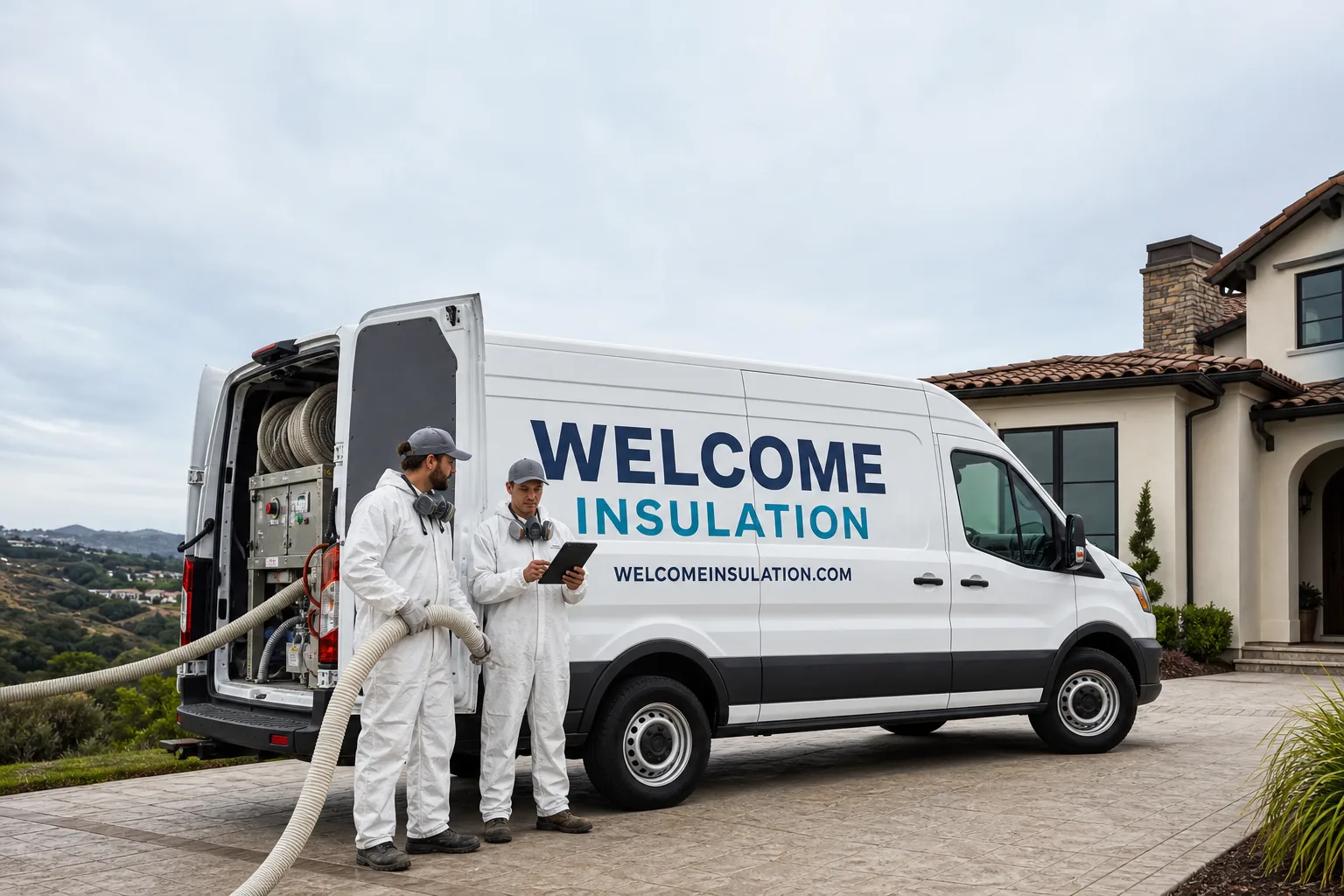
Fast, Reliable Attic Insulation Across San Joaquin Hills
Attic insulation in San Joaquin Hills usually costs between $1,700 and $4,800, and the work typically takes one to two days. That’s the straight answer to what most homeowners ask us first. Whether you’re up near the ridge communities off Newport Coast Drive or down toward the 73 corridor, our crews know the housing stock here. Call (855) 795-2118 and we’ll schedule an attic assessment at your San Joaquin Hills home, usually the same week you call.
Why Welcome Insulation Is San Joaquin Hills’s Preferred Attic Insulation Company
Ruben Ochoa leads our insulation-only team, and he’s spent years diagnosing exactly the kind of attic problems that plague San Joaquin Hills homes built in the 1980s, 1990s, and 2000s. For homeowners also interested in Reflectix service in San Joaquin Hills, we can discuss how it compares to our approach. We’re not a general contractor who does insulation on the side. Insulation is all we do. That focus means our installers have seen hundreds of cathedralized vaulted attics with steep multi-pitch roofs and can spot scoured insulation, missing baffles, and air leaks around recessed cans faster than a crew that splits its time across plumbing and drywall. Homeowners in San Joaquin Hills keep calling us back because we explain what’s actually wrong before we propose a fix.
We service San Joaquin Hills weekly, which means we don’t treat your neighborhood like a commute. Our response window to San Joaquin Hills is generally same day or next day for urgent jobs. When a homeowner off Bommer Canyon calls with an attic emergency, we know whether they’re likely dealing with wind-scoured fiberglass on a ridge or a rodent-tunneled batt job in a lower tract. That local familiarity matters when you’re deciding between an Attic Insulation repair or a full replacement.
Attic Ventilation in San Joaquin Hills
Attic Ventilation work in San Joaquin Hills is rarely just about adding more vents. Around here, it’s about fixing airflow that’s already working against you. In this area’s hillside homes, strong afternoon onshore winds off the Pacific and canyon crosswinds push air through poorly baffled soffit vents, and if the existing baffles are blocked, crushed, or missing, that wind lifts and displaces your blown-in insulation instead of channeling out through the ridge. A typical attic ventilation remediation in San Joaquin Hills runs $300 to $1,100, depending on how many soffit bays need re-baffling and whether the existing venting can be salvaged.
Wind-Washing Control
The first thing we check in a San Joaquin Hills attic is whether incoming wind can reach the underside of the roof deck and blow across the insulation. When it can, it strips heat from the attic in winter and moves your insulation to the downwind side of the house. We install baffles that block the wind while still letting the roof assembly breathe.
Balancing Soffit and Ridge Flow
Homes on the windward side of a ridge in San Joaquin Hills often have too much intake and not enough exhaust. We balance the system so that air actually moves from soffit to ridge, not sideways across your ceiling.
Radiant Barrier in San Joaquin Hills
Radiant Barrier installation in San Joaquin Hills answers a very specific local problem: big glazed facades and west-facing ridge walls gathering radiant heat that loads up your air conditioning. The reflective surface blocks most of the radiant heat before it enters the attic or vaulted cavity. Radiant barrier installation in San Joaquin Hills typically runs $1,350 to $3,600, depending on whether it’s attached to the rafters or laid over existing insulation.
Vaulted Ceilings and Cathedralized Attics
In San Joaquin Hills custom homes with vaulted ceilings and cathedralized attics, a radiant barrier is one of the few retrofits that can improve thermal performance without tearing out the ceiling. We attach it directly to the underside of the roof deck, where it reflects heat back out through the shingles before the heat ever reaches the living space.
Pairing with Air Sealing
A radiant barrier in San Joaquin Hills works best when the attic is first air-sealed around recessed cans, chases, and any penetrations that let marine air in. We usually recommend doing both in one visit, since the barrier’s performance drops sharply if conditioned air is leaking past it.
Trusted Brands We Service in San Joaquin Hills
We install products from Owens Corning, CertainTeed, and Rockwool in San Joaquin Hills homes, and our crews have installed enough of each to tell you honestly which one fits your attic, your roofline, and your budget. CertainTeed fiberglass batts work well in the low-slope tract sections. Rockwool is our recommendation in San Joaquin Hills when you want fire resistance plus sound control in a cathedralized attic. Johns Manville blown-in fiberglass is a dependable, proven product for attics that just need a proper top-up. We stock parts and materials in our local supply chain, so when a San Joaquin Hills homeowner needs us, we’re not waiting on a truck from a warehouse across the state.
Common Attic Insulation Problems We See in San Joaquin Hills Homes
- Wind-scoured blown-in insulation on ridge slopes. The strongest marine wind in San Joaquin Hills pushes fiberglass or cellulose to the downwind side, leaving one slope bare drywall and the other a thick pile. Most homeowners don’t notice until rooms on one side of the house run 5 to 8 degrees warmer in summer.
- Air leakage through recessed cans and HVAC chases. Canyon crosswinds find every opening in a cathedralized San Joaquin Hills vault, and air leaks around recessed lighting and duct chases can undercut whatever R-value you have. We air-seal these penetrations as part of every insulation install.
- Under-baffled soffit vents on steep multi-pitch roofs. Many original installations from the 1980s and 1990s in San Joaquin Hills skimped on baffles because the roofs were hard to access. Without them, incoming wind lifts insulation and pushes it downslope, especially on the steeper pitches.
- Collapsed insulation under foot traffic in a shared truss space. These older San Joaquin Hills homes often see wiring, lighting, or storage work after the initial insulation was installed, and compressing fiberglass or mineral wool kills its R-value. Air sealing and a top-up is the common fix.
Pricing for Attic Insulation in San Joaquin Hills, CA
Key takeaways:
- Attic insulation top-up in San Joaquin Hills: $900 to $2,200
- Attic batt insulation for a standard San Joaquin Hills attic floor: $1,700 to $3,500
- Air sealing plus blown-in insulation on a cathedralized attic: $2,400 to $5,000
- Attic ventilation repair (re-baffling, soffit work): $300 to $1,100
- Radiant barrier install: $1,350 to $3,600
Everything above depends on square footage, pitch, and how much air-sealing the attic needs. A 2,100-square-foot San Joaquin Hills home with a simple gable roof is at the low end of every range. A 4,000-square-foot custom with a vaulted and cathedralized attic and multiple ridge planes is at the high end. Call (855) 795-2118 or Attic Insulation in San Joaquin Hills for a free estimate. We’ll walk the attic with you, show you what’s going on, and give you a written quote before we start.
What drives cost more than anything in San Joaquin Hills is air sealing. If your attic is a leaky vaulted assembly with marine air passing around every can and chase, the labor to seal it properly is the bulk of the bill. We’d rather quote you the sealing than install new insulation that’ll underperform in six months.
We Also Serve Cities Near San Joaquin Hills
Our attic insulation crews cover the whole San Joaquin Hills area, including Aliso Viejo, Newport Beach, Laguna Beach, and Irvine. If you live in one of those communities and your attic is under-insulated, call us. We know the canyons, the ridgelines, and the housing stock in every one of these ZIPs, and we can usually get to you within a day for a free estimate.
Serving San Joaquin Hills, CA — Our Local Coverage Area
We’re based in the San Joaquin Hills area and know this community well. Use the map below to see our service coverage — if you’re nearby, we can almost certainly help.
FAQs About Attic Insulation in San Joaquin Hills
That’s classic wind-driven insulation displacement, and it’s the most common attic problem we diagnose in San Joaquin Hills gated ridge communities. Strong marine air and canyon crosswinds blow through poorly baffled soffit vents and physically push loose-fill insulation to the downwind slope. The fix is to rake the displaced material back level, air-seal the root openings, and install proper baffling so the wind can no longer scour the insulation. Call (855) 795-2118 for an inspection, especially if rooms on one side of the house feel warmer.
Yes. We insulate cathedralized attics in San Joaquin Hills by air-sealing around every recessed can and chase from inside the attic cavity, then installing insulation that fits the available rafter depth. In most cases we can do this without removing any drywall. The work takes one to two days, and the ceiling stays intact. The key is doing the sealing first, because in these hillside homes, marine air finds every penetration.
Air sealing is more important, and we’ll tell you that before we sell you anything. In San Joaquin Hills, the wind forces the conversation. A leaky attic with perfect R-value underperforms a sealed attic with average R-value, because moving air strips heat from the assembly no matter what insulation sits in it. We always address air-sealing and wind-washing control before we talk about adding R-value.
They do. In San Joaquin Hills, west-facing glass and ridge walls load radiant heat onto the roof deck, and a radiant barrier reflects most of that before it enters the attic. It’s not a substitute for insulation, but it cuts cooling loads noticeably in these canyon-exposed homes. We typically recommend pairing it with air sealing and at least R-38 of blown-in insulation.
In many San Joaquin Hills attics, repair is enough. We rake displaced blown-in insulation back to an even depth, air-seal the penetrations that caused the problem, and install baffles so the wind can’t push the material downhill again. If the existing insulation is deteriorated or rodent-damaged, a full removal and reinstall makes more sense. We’ll show you photos from inside your attic and let you decide based on what we actually find.
Written by Ruben Ochoa, Owner at Welcome Insulation, serving San Joaquin Hills since our first day in this area.