
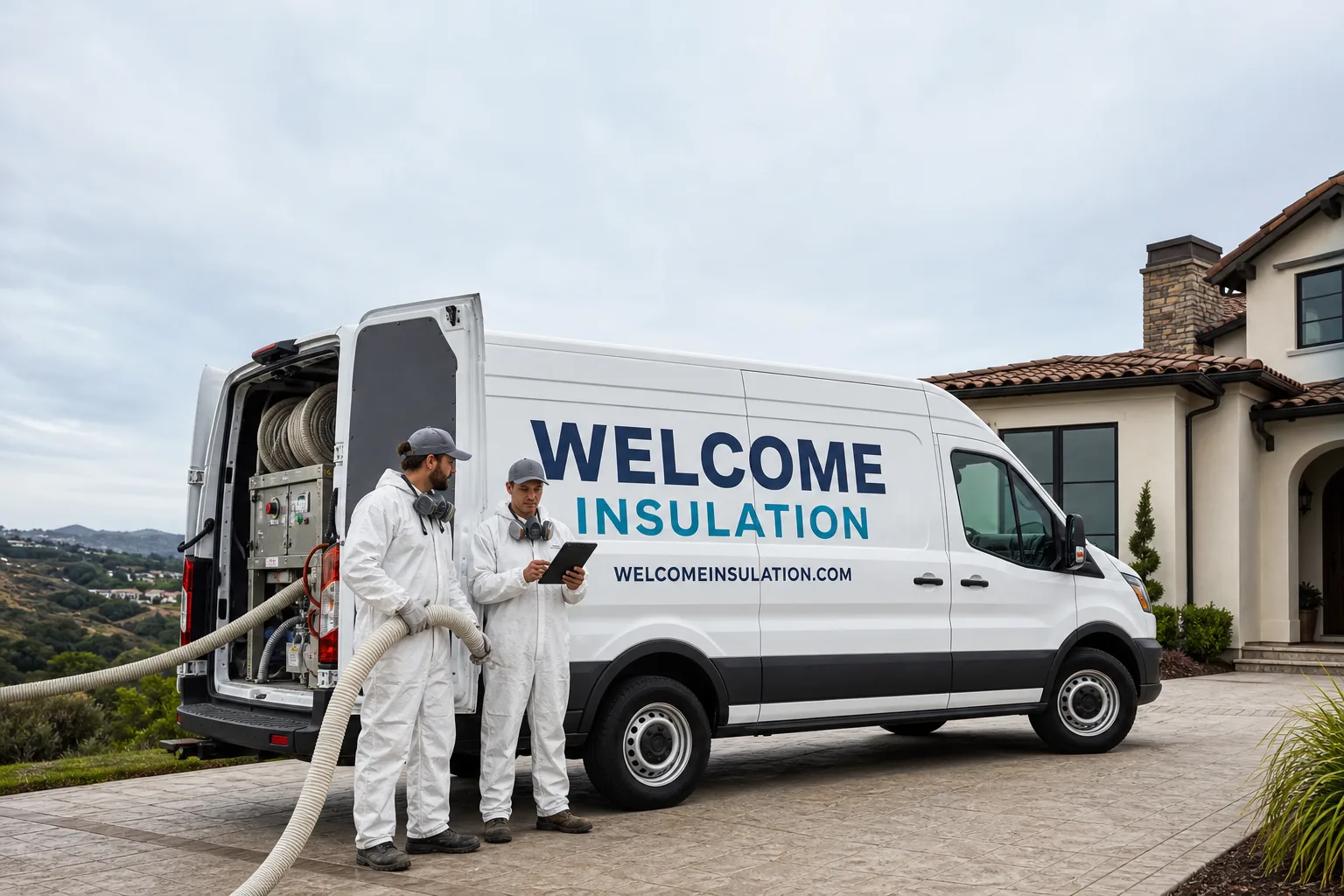
Trusted Attic Insulation for San Joaquin Hills Homeowners
Most San Joaquin Hills homes leak conditioned air through the attic, which is why upstairs rooms run hot in July and the heater never seems to catch up in December. Welcome Insulation fixes that at the source. Insulation is all we do, and our crews work in San Joaquin Hills, Newport Beach, and Laguna Beach every week. We install Owens Corning, Johns Manville, Knauf, and GreenFiber, but more importantly, we match the material to your attic’s actual condition rather than selling whatever is on the truck. If you are tired of paying to heat and cool the space above your ceiling, call (855) 795-2118 for a free estimate.
Key Takeaways
- Attic insulation in San Joaquin Hills typically runs $1.50 to $3.50 per square foot for blown-in fiberglass or cellulose, with spray foam running higher due to material and labor.
- Most attic jobs finish in one day. Removal and re-insulation on larger homes can stretch to two.
- Welcome Insulation is a single-trade specialist. Every crew member installs insulation full time, not roofing or drywall on the side.
- You do not have to guess which material is right. We explain the recommendation before we quote, and we install eight major brands so the job dictates the product.
Insulation Contractors
Insulation Contractors in San Joaquin Hills are the specialists you call when an attic has too little coverage, the wrong material for the climate, or air leaks that a general handyman would not know how to diagnose. The coastal marine layer keeps mornings damp and afternoons mild, but summer heat still pushes attic temperatures above 140 degrees. A focused contractor will measure existing R-value, check for gaps around recessed lights and plumbing penetrations, and recommend a specific material rather than a generic re-blow. Welcome Insulation fits that description. We are not general contractors who install insulation as an add-on. We are insulation contractors, period.
What a Real Specialist Checks
We start with the attic floor, not the walls. Loose-fill settles over time, and in older San Joaquin Hills homes built in the 1980s and 1990s, we regularly find R-19 batts that have compressed to R-11 or worse. We also look for gaps around can lights, bath fan housings, and the attic hatch, because air sealing matters as much as insulation depth. Our Attic Insulation Maintenance Checklist for San Joaquin Hills Homeowners covers what to watch between professional visits.
When You Should Call
If rooms directly under the attic stay 8 to 10 degrees warmer than the rest of the house in summer, your insulation is not doing its job. Our Attic Insulation Troubleshooting: Common Problems and How to Fix Them explains how to spot these issues early. The same applies if you can see ceiling joists poking through the existing material. That is the visual signal for “too thin,” and it means conditioned air is escaping on a daily basis.
Attic Ventilation
Attic Ventilation is the system of intake and exhaust points that lets a San Joaquin Hills attic breathe, and it works in tandem with insulation rather than replacing it. Without proper airflow, summer heat builds until it radiates down through the ceiling and your AC runs longer. Without enough intake, exhaust fans pull conditioned air out of the living space instead of outside air. Welcome Insulation evaluates ventilation whenever we quote an insulation job, because adding R-value to a poorly vented attic creates a moisture trap, not an efficiency win.
How Ventilation Protects Insulation
Fiberglass and cellulose lose effectiveness when damp, and moisture in a sealed attic is exactly what mold needs to grow. Balanced intake and exhaust keeps the air dry enough for insulation to perform at its rated R-value for years. In San Joaquin Hills specifically, morning fog raises the stakes, so we pay close attention to soffit vent condition before we install anything.
Signs of Inadequate Airflow
Look for rust on exposed roofing nails inside the attic, condensation on the underside of the roof deck, or a musty smell that gets worse after rain. These all point to ventilation that cannot keep up. We will tell you if ventilation needs work, but we will not sell you insulation you do not need just to fix it.
Radiant Barrier
Radiant Barrier is a reflective material installed under the roofline or over attic insulation to reduce radiant heat gain, and it is most effective in sunny climates like San Joaquin Hills where the sun beats on the roof for eight months a year. It does not replace insulation. It reduces the heat that enters the attic in the first place, which lowers the temperature around your insulation and your ductwork. Welcome Insulation installs radiant barrier in attics where roof pitch and framing allow, and we will tell you honestly when a home would get more benefit from additional insulation instead.
Where the Real Savings Are
Homes with attic-mounted ductwork benefit most. Ducts running through a 140-degree attic lose a measurable percentage of their cooling before air reaches the rooms. A radiant barrier lowers that attic temperature, so your HVAC system works less. We see this pattern constantly in San Joaquin Hills homes with the AHU in the attic.
What Affects Performance
Installation quality matters more than material brand. A radiant barrier with a 3-inch air gap on at least one side performs noticeably better than one stapled directly to the roof deck with no gap. We also check that existing insulation is not causing a vapor problem before we add a reflective layer on top.
Attic Cleaning Services
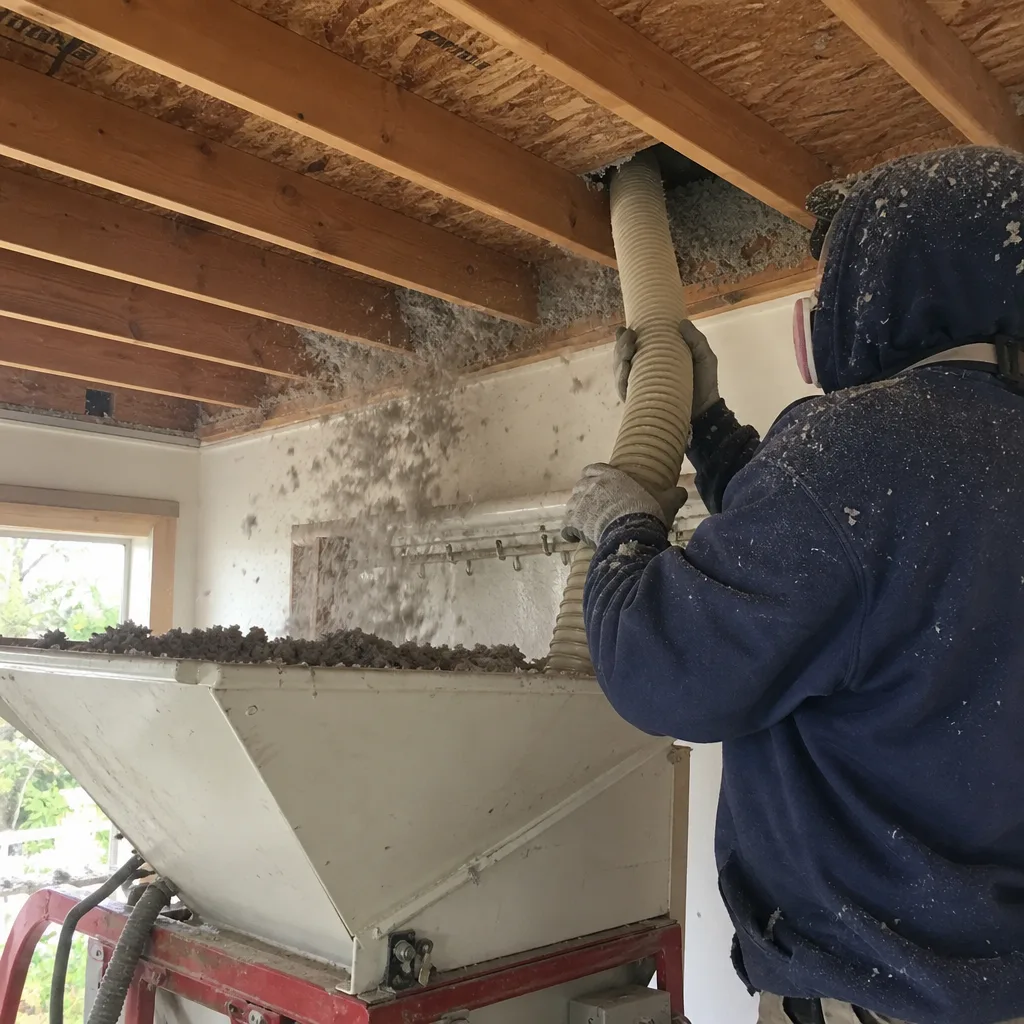
Attic Cleaning Services remove old dust, rodent droppings, and accumulated debris before new insulation goes in or after pest remediation. In San Joaquin Hills, where we commonly see pack rats and roof rats in the canyons and hillside neighborhoods, cleaning is often the first step of any insulation replacement. You do not want a fresh layer of GreenFiber cellulose blown over rodent waste. Welcome Insulation offers full attic cleaning as part of a removal-and-replacement job, so you deal with one contractor and one schedule.
The Connection to Insulation Performance
Debris, dust, and old nesting material hold moisture and block airflow through soffit vents. That directly shortens the life of new insulation. A clean attic also lets us see the deck and joists clearly, which means we can find air leaks and damaged venting that would otherwise stay buried.
What We Actually Remove and When
We vacuum out loose-fill, bag old batt insulation, remove pest waste, and dispose of everything off-site. If you only have a light layer of dust, we will tell you cleaning is optional. We would rather earn your trust than add a line item you do not need.
What happens when you call
- 1
A real person answersNo phone trees — you reach a local pro.
- 2
You get an upfront price rangeHonest numbers before anyone is dispatched.
- 3
A background-checked tech heads outLicensed & insured, dispatched right away.
- 4
You approve before work beginsNothing starts until you say go.
Attic Mold Removal
Attic Mold Removal in San Joaquin Hills is the process of treating and removing fungal growth on attic framing, sheathing, and insulation caused by trapped moisture, and it usually goes hand in hand with a ventilation or roof leak repair. Welcome Insulation handles the insulation side of mold remediation. We remove contaminated insulation, prepare the attic for treatment, and re-insulate once the source of moisture is fixed. If mold is widespread on structural framing, we will tell you honestly when a licensed mold remediation specialist should handle the treatment step.
Why Coastal Fog Makes This Common
San Joaquin Hills sits high enough to catch cool marine air but close enough to the coast that humidity climbs fast at night. A bathroom fan vented into the attic, a broken soffit vent, or an undersized roof exhaust all push moisture into the framing. Mold follows. We have walked through attics in San Joaquin Hills where the entire north-facing roof deck was covered in mildew within two seasons of a bad vent install.
Do Not Just Insulate Over It
Blowing new insulation over visible mold seals in the problem and gives it a food source. The right sequence is remove the contaminated material, eliminate the moisture source, then re-insulate with fresh material once the attic is dry. We will walk you through that sequence before we quote anything.
Attic Insulation Removal
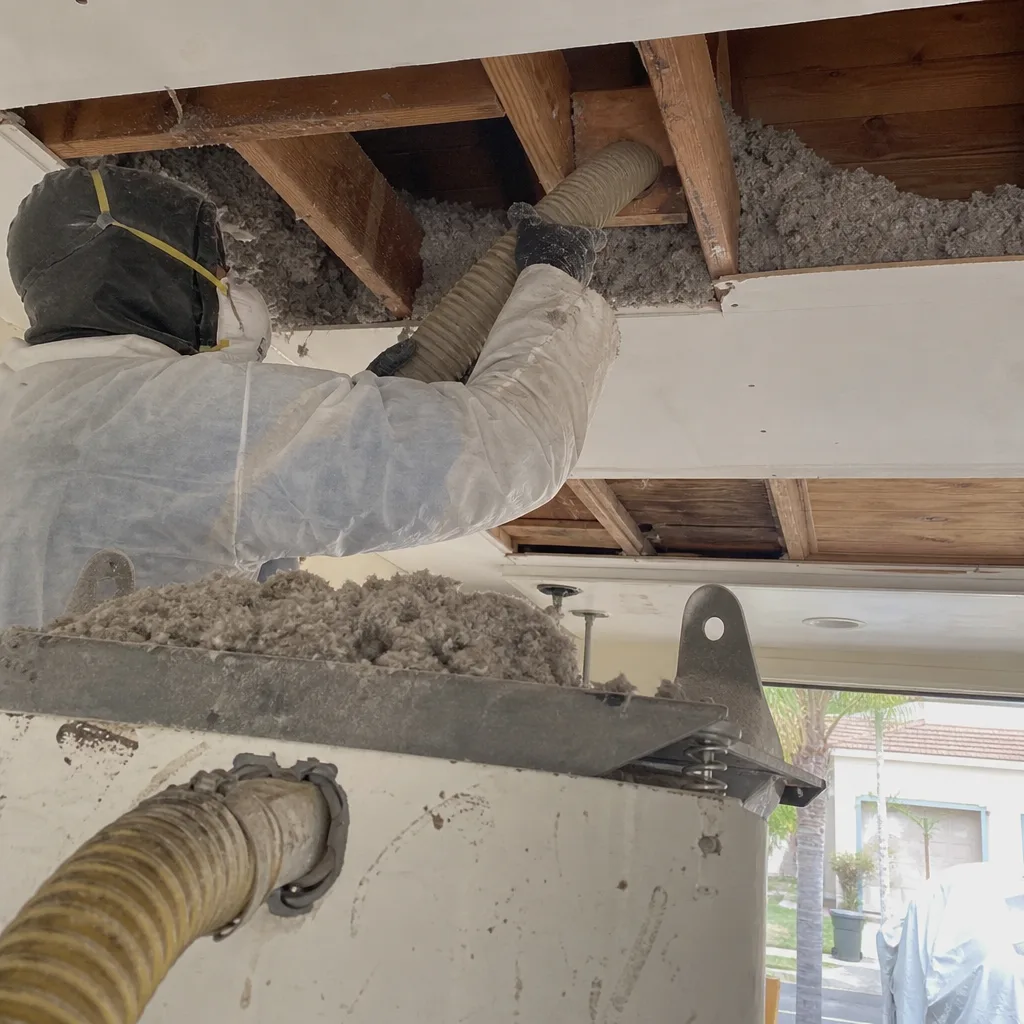
Attic Insulation Removal is what San Joaquin Hills homeowners need when old material is water-damaged, pest-infested, compressed beyond usefulness, or loose-fill has settled below code minimums. It is not a service every home needs, but for a 30-year-old attic with rodent activity or a past roof leak, removing the old material is the only way to start clean. Welcome Insulation uses commercial HEPA-filtered vacuums to extract old loose-fill and bags fiberglass batts for disposal. The whole process on a typical San Joaquin Hills two-story home takes one day, sometimes two when we are doing a full clean and re-insulate.
When Removal Beats Adding on Top
If the existing insulation is damp, compacted, or full of pest waste, adding new material on top locks the problem in place. You end up paying for insulation that underperforms from day one. Removal costs more upfront, but the long-term R-value of a clean install is what actually lowers your energy bills.
What We Look for First
We check for asbestos before anything else in homes built before 1980. Vermiculite insulation, especially from the Libby, Montana mine, is a known asbestos carrier, and disturbing it without testing is dangerous. If we see it, we stop and recommend lab testing. Your safety comes before any sale.
Brands We Service
Welcome Insulation installs products from eight major manufacturers so we never have to force a brand into a job it does not fit. For blown-in attics, we regularly use GreenFiber cellulose because it holds its R-value in coastal damp better than some fiberglass alternatives, and its recycled content appeals to San Joaquin Hills homeowners who want the eco-conscious option. Owens Corning fiberglass is our go-to for batt applications where a specific R-value per inch is the target, and it is one of the most documented brands in the industry.
Johns Manville and Knauf round out our fiberglass options for homeowners who have a brand preference or a builder specification. Whether you have a preferred material, a preferred brand, or just want a straight recommendation based on your attic’s condition, our team can walk you through the options and explain why we recommend one over another.
Signs You Need a Pro Right Now
- Rooms directly under the attic run 8 to 10 degrees hotter than the rest of the house. That is not just discomfort. It means your AC is running overtime every afternoon and your insulation is not stopping heat transfer. The fix usually starts with measuring attic R-value.
- You can see ceiling joists above the existing insulation. When joists are visible, you have roughly half the recommended coverage. The exposed wood is a thermal bridge that conducts heat straight into your living space.
- Your energy bills climbed noticeably over the last two years without a rate change. Insulation settles and degrades. If the HVAC equipment is the same, the bills should be stable. A rising bill often points to an attic that is losing its R-value.
- You see moisture stains or smell mildew near the attic hatch. Damp insulation loses effectiveness fast, and it invites mold. This is a do-not-wait situation because the damage compounds every season.
- You hear scratching or scampering above the ceiling at night. Rodents tear apart insulation for nesting material and leave droppings throughout the attic. The insulation is already compromised, and a clean removal is the only real fix.
Our Process, Step by Step
- 1
We measure the attic, not just square it off. Ruben Ochoa, owner of Welcome Insulation, trains every crew to measure existing R-value at multiple points, check air leaks around penetrations, and assess ventilation before recommending anything. A quote based on square footage alone skips half the diagnosis.
- 2
We explain the recommendation before you spend a dollar. If your attic needs R-38 blown-in cellulose, we will tell you why. If spray foam is a better fit because your roof deck is unusual, we will explain that too. You should never have to ask us why we recommended a material.
- 3
We prep the area to protect your home. That means sealing off the attic access, running HEPA filtration when removing old material, and covering floors from the entry door to the attic hatch. One trade, done cleanly, every time.
- 4
We install to manufacturer spec, not to a short cut. R-value per inch depends on correct density and depth. We measure depth as we blow, spot-check density, and confirm even coverage across the whole attic floor before we pack up.
- 5
We walk you through the finished attic. You will see the coverage, the vent condition, and the depth markers before we close the hatch. If something does not look right to you, we fix it before we leave.
How Much Does Attic Insulation Cost in San Joaquin Hills?
A typical attic insulation job in San Joaquin Hills runs $1.50 to $3.50 per square foot for blown-in fiberglass or cellulose, depending on existing depth, access, and whether old material needs removal first. For current Attic Insulation pricing specifics, we evaluate each attic in person. For a 1,500-square-foot attic, that puts most projects between $2,250 and $5,250. Spray foam runs higher, generally $3.00 to $7.00 per square foot, because the material and application process cost more. Radiant barrier, when installed as an add-on, typically adds $0.50 to $1.50 per square foot depending on roof complexity.
What drives the price up: old insulation removal, pest contamination, a tight or low-slope attic that slows the crew down, and the condition of your existing ventilation. What keeps it down: a clean, accessible attic with no rodent issues and straightforward roof geometry. The best way to avoid overpaying is to understand exactly what is included in the quote. Ours includes removal, disposal, air seal around major penetrations, the insulation itself, and a final depth verification. Call (855) 795-2118 for a free estimate, and we will give you a line-item breakdown before any work is scheduled.
Our Service Area Near San Joaquin Hills
Welcome Insulation serves San Joaquin Hills and the surrounding coastal and inland Orange County communities, including Attic Insulation in Irvine, Attic Insulation in Costa Mesa, Newport Beach, Laguna Beach, Laguna Woods, Aliso Viejo, Laguna Hills, Lake Forest, Tustin, Santa Ana, and Mission Viejo. Most San Joaquin Hills appointments are scheduled within the same week, and we keep our calendar tight so response times stay short across the whole service area. If you live in San Joaquin Hills or anywhere nearby, the same crews, the same brands, and the same process apply.
Serving San Joaquin Hills, CA — Our Local Coverage Area
We’re based in the San Joaquin Hills area and know this community well. Use the map below to see our service coverage — if you’re nearby, we can almost certainly help.
Frequently Asked Questions About Attic Insulation in San Joaquin Hills
Attic insulation is the layer of material installed on your attic floor or roofline that slows heat transfer between your living space and the outside. In San Joaquin Hills, the right attic insulation keeps summer heat from radiating down through your ceilings and keeps winter warmth from escaping through the roof. We also provide Attic Insulation – Aliso Viejo for homeowners just north of the hills. The most common materials are blown-in fiberglass, cellulose, and spray foam.
Most attic insulation jobs in San Joaquin Hills are completed in one day, usually four to eight hours depending on attic size, accessibility, and whether old material needs removal. A full removal and re-insulation on a larger home can stretch to two days. We will give you a firm timeline before we schedule anything.
Attic insulation in San Joaquin Hills typically costs $1.50 to $3.50 per square foot for blown-in materials, with spray foam running $3.00 to $7.00 per square foot. A 1,500-square-foot attic usually lands between $2,250 and $5,250. Call (855) 795-2118 for an exact quote, estimates are free.
Yes, we install Owens Corning fiberglass products as part of our eight-brand material roster. We use Owens Corning when a specific R-value per inch is the target and the attic conditions suit fiberglass batt or blown-in application. Ask us why we recommend it over alternatives, and we will give you a straight answer.
We offer same-week scheduling for urgent cases like a roof leak that soaked your insulation or a rodent infestation that requires immediate removal. True same-day emergency slots are limited, but call (855) 795-2118 and we will tell you the soonest available appointment in San Joaquin Hills.
All of our installations follow manufacturer specifications for depth and density, which is what keeps the R-value performing as documented. We stand behind our workmanship and will come back to correct an installation issue at no charge. For specific warranty details on a given material, we will point you to the manufacturer’s documentation before you commit.
Clear a path from the entry door to the attic hatch, move any stored items away from the hatch opening, and let us know if you have pets that need to stay in a separate room. If we are removing old insulation, cover or move anything valuable in the rooms below the attic access. We handle floor protection and clean-up on our end.
Schedule Your Attic Insulation Service in San Joaquin Hills Today
Your attic is leaking money every season it stays under-insulated. Call (855) 795-2118 now for a free, no-obligation estimate from Welcome Insulation. We will measure your attic, explain exactly what it needs, and give you a line-item quote before any work begins. Attic Insulation in San Joaquin Hills is what we do every day, and we would be glad to help you next.
Written by Ruben Ochoa, Owner at Welcome Insulation, serving San Joaquin Hills and surrounding Orange County communities. Insulation is all we do.