
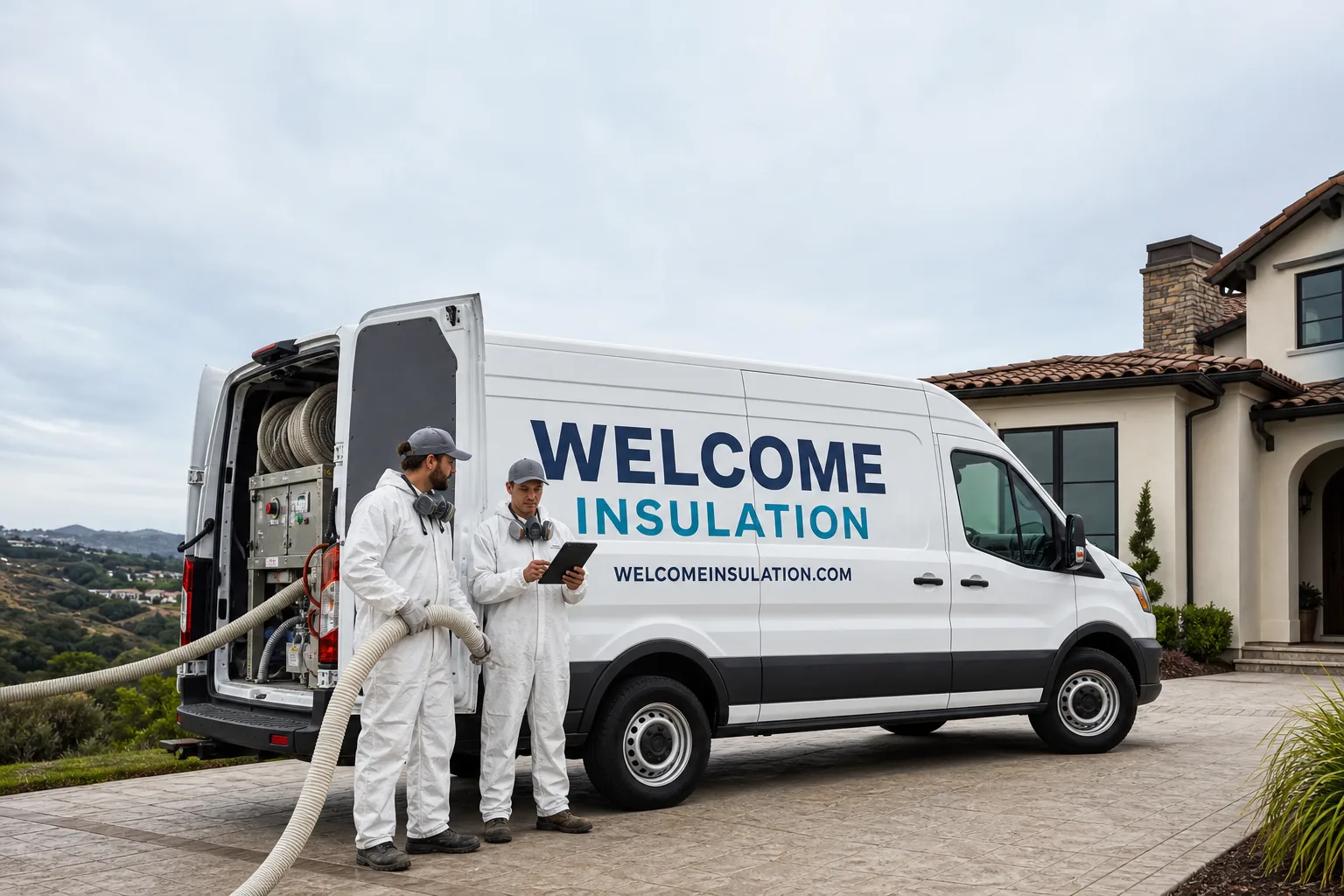
Fast, Reliable Attic Insulation Across Costa Mesa
Attic insulation in Costa Mesa is a different job than it is ten miles inland. Here, the marine layer that rolls in most mornings off the Pacific doesn’t just cool the air. It pushes moisture into vented attics, where it condenses on cool stucco and framing. That means the right insulation choice, and the right prep work, decides whether your attic stays dry or slowly breeds mold. Our crews work in Costa Mesa weekly, and we know the difference between a 1958 Westside ranch and a townhome near South Coast Metro. Call (855) 795-2118 for a free estimate, usually scheduled within a day or two.
Why Welcome Insulation Is Costa Mesa’s Preferred Attic Insulation Company
We’re an insulation-only contractor, so every Costa Mesa job we take on gets the full attention of a crew that does nothing else. Homeowners in 92626, 92627, and 92628 have called us for years because the first question we ask isn’t “how much insulation do you want?” It’s “what’s happening in your attic right now?” In Costa Mesa, the answer is often moisture, not a lack of R-value. We’ve worked on classic stucco tract homes near Orange Coast College, raised ranch houses off Harbor Boulevard, and newer infill units near The Camp and South Coast Plaza. Ruben Ochoa, who leads our team, has walked through enough Costa Mesa attics to recognize the local failure patterns before opening the access hatch. That matters when a wrong material recommendation means another five years of damp batts and musty air.
Radiant Barrier in Costa Mesa
Radiant Barrier installation in Costa Mesa is one of the more effective upgrades we recommend for homes that roast in the afternoon sun. A radiant barrier is a reflective material, often aluminum-faced, installed along the underside of the roof decking. It reflects radiant heat back out before it can radiate down into your living space. In Costa Mesa’s mild but sunny climate, a properly installed radiant barrier can cut attic temperatures noticeably on clear summer days, which is when the marine layer burns off and the inland sun takes over. The cost for a typical Costa Mesa single-story home runs $1,200 to $2,800 depending on attic square footage, roof pitch, and access. For homes in 92627 with older, tighter attics, we often pair a radiant barrier with air-sealing because reflecting heat doesn’t fix dampness.
Where It Works Best in Costa Mesa
Westside ranches with low-slope roofs and minimal insulation see the biggest change. The stucco walls absorb heat all afternoon, and the attic acts like a heat sink. A radiant barrier breaks that cycle at the deck. It’s less critical on condos or townhomes with shared walls and less exposed roof area, but in a detached single-family home, it’s one of the most cost-effective comfort upgrades available here.
Installation Notes
We avoid stapling radiant barrier directly to the deck in a way that traps moisture against the sheathing. In Costa Mesa’s marine air, that’s a fast track to condensation staining. The right install leaves an air gap, which lets the deck breathe while still reflecting heat. It’s a detail most general contractors skip, and it’s why our insulation-only focus pays off for local homeowners.
Attic Cleaning Services in Costa Mesa
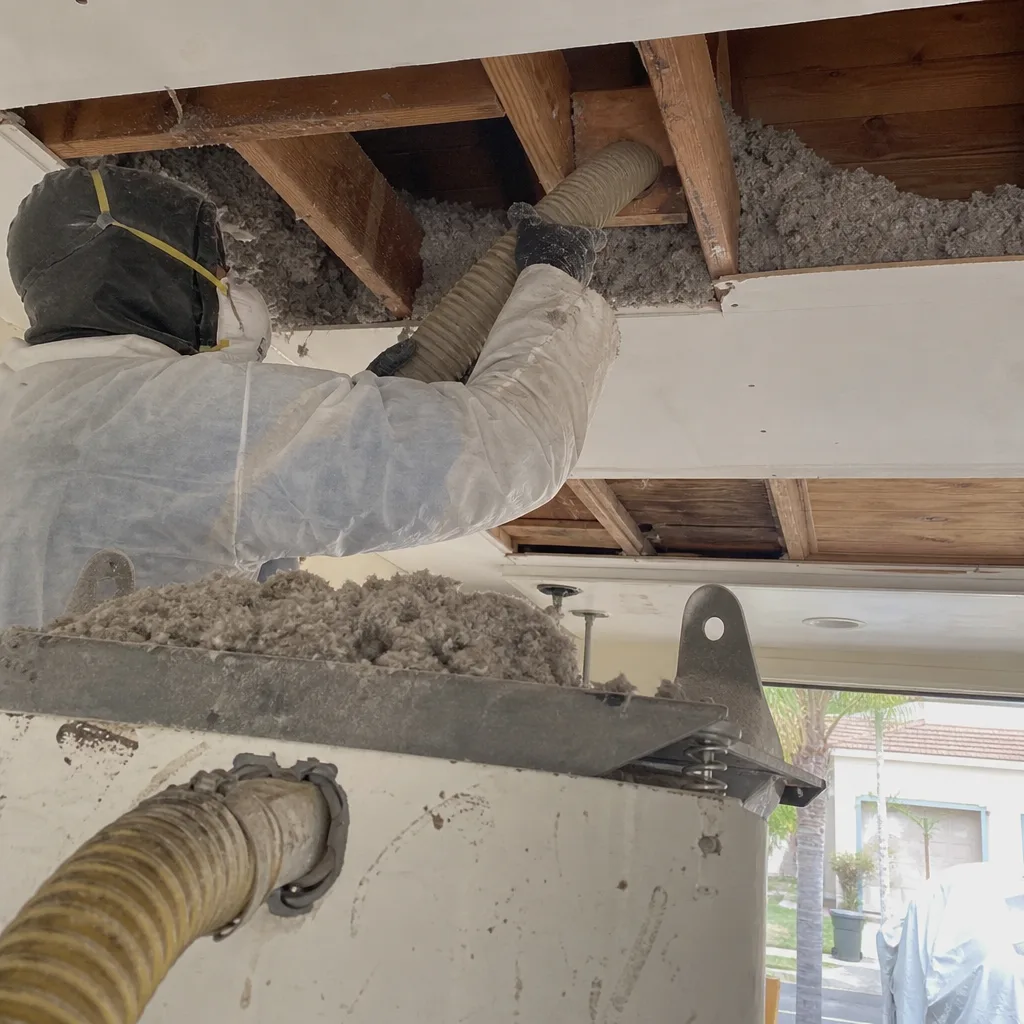
Attic Cleaning Services in Costa Mesa are a critical first step for older homes, especially the 1950s and 1960s tract houses scattered throughout 92627. We remove old, failed insulation, vacuum out rodent debris and dust, sanitize surfaces, and prep the attic for new material. A full attic cleaning and insulation removal for a typical Costa Mesa ranch runs $1,800 to $4,500, depending on attic size, contamination level, and access difficulty. If there’s mold on the sheathing, we can recommend a remediation partner before we insulate. Cleaning is not optional here, not when marine-layer moisture has already saturated old batts and turned them into a soggy mat.
After Removal, What Happens Next
Once the old insulation is out, we inspect the top plates, around electrical boxes, and at every penetration where warm air can leak into the attic. In Costa Mesa’s older homes, knob-and-tube-era penetrations are common and almost always unsealed. That’s where warm indoor air carrying moisture sneaks up into the attic and condenses. We air-seal with foam or caulk before any new insulation goes in. Skipping this step means the new insulation inherits the same condensation problem.
Cleaning in Tight Envelopes
Newer townhomes near South Coast Metro have a different challenge: tight building envelopes with less natural ventilation. Moisture that gets in tends to stay in. We approach those attics carefully, prioritizing cleaning and airflow verification before adding insulation. The goal is a dry, stable attic cavity, not just a thicker blanket over a damp one.
What happens when you call
- 1
A real person answersNo phone trees — you reach a local pro.
- 2
You get an upfront price rangeHonest numbers before anyone is dispatched.
- 3
A background-checked tech heads outLicensed & insured, dispatched right away.
- 4
You approve before work beginsNothing starts until you say go.
Trusted Brands We Service in Costa Mesa
We install eight manufacturer brands, and for Costa Mesa’s coastal conditions we lean on a few standouts. ROCKWOOL is a mineral wool batt that resists moisture and doesn’t rot when exposed to the kind of dampness a Westside attic sees in June. We install Rockwool because it holds its shape and R-value even when condensation is present. Owens Corning fiberglass is a reliable, well-documented choice for standard vented attics where moisture is already controlled. GreenFiber cellulose is an option for homeowners who want a high-recycled-content blown-in product with good air-sealing properties. We stock these products locally for Costa Mesa customers, which keeps turnaround quicker than ordering special material from an out-of-area distributor.
Common Attic Insulation Problems We See in Costa Mesa Homes
- Marine-layer condensation under attic vents. On the Westside, the morning marine layer pushes damp air into the attic, where it condenses on cool framing. Batts directly beneath gable vents are usually the first to get soggy, then they compress and lose their R-value.
- Mold on sheathing in tight stucco envelopes. Costa Mesa’s post-war stucco homes trap warm, moist indoor air against cool exterior walls. When that air finds its way into the attic, it condenses on the sheathing and feeds mold. Adding insulation without fixing the moisture path makes it worse.
- Settled, thinned 1950s-60s batt insulation around old penetrations. Original fiberglass batts settle over decades, especially around unsealed knob-and-tube wiring holes and top plates. The gaps that open up become air-leak highways that pull damp air into the attic year-round.
- Failed or missing attic baffles in vented ranch homes. In many Costa Mesa ranches, the original baffles that keep insulation clear of the eave vents have broken down or were never installed properly. That blocks airflow, which is the opposite of what a moisture-prone attic needs.
Pricing for Attic Insulation in Costa Mesa, CA
Attic insulation pricing in Costa Mesa runs a wide but predictable range. Here are the most common line items our Costa Mesa customers see:
- Blown-in attic insulation (new install): $1,600 to $3,800, depending on attic size and target R-value.
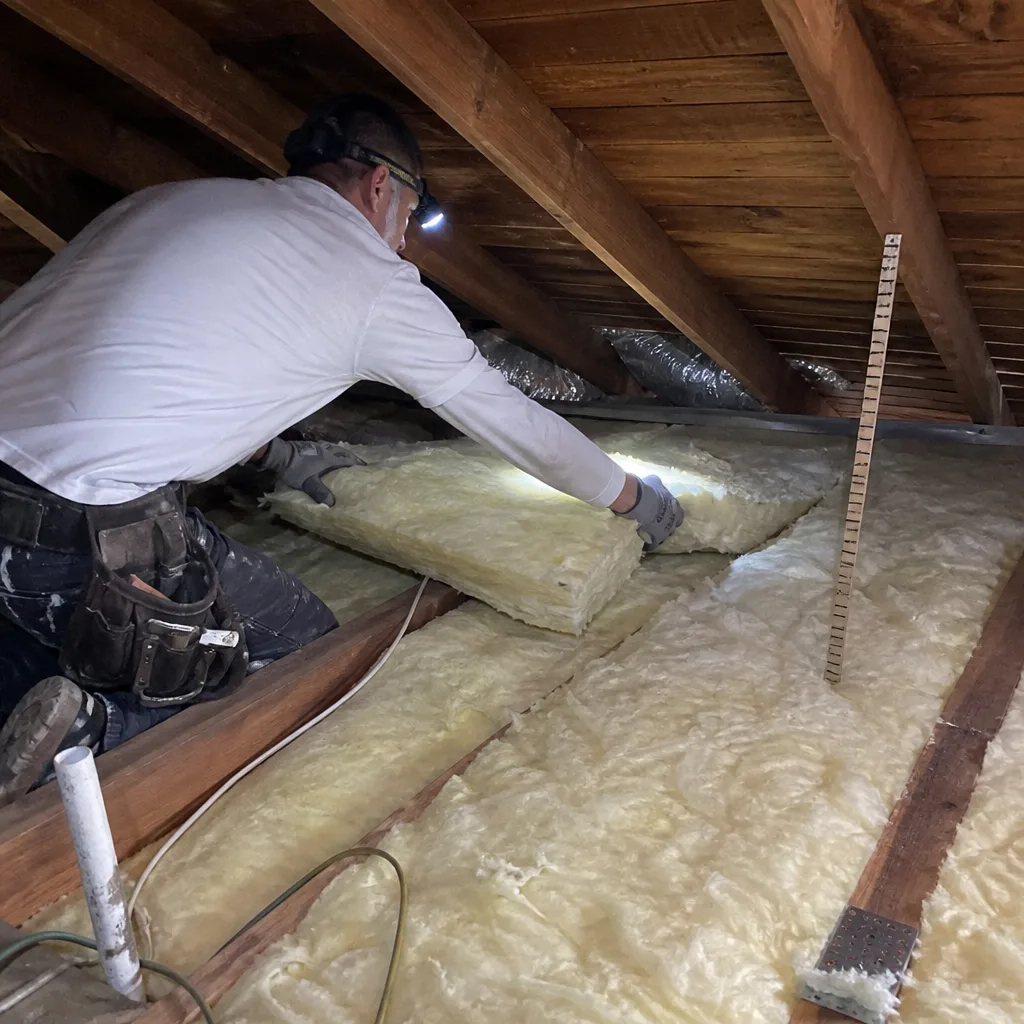
- Attic batt insulation (R-38 to R-49): $1,400 to $3,200 for a typical single-story ranch.
- Attic insulation top-up: $900 to $2,100, when existing insulation is dry and the only need is additional depth.
- Attic insulation replacement (full removal + new): $2,800 to $6,000 for a Westside ranch with failed material.
- Radiant barrier installation: $1,200 to $2,800 depending on roof pitch and access.
- Attic cleaning (removal, sanitization, prep): $1,800 to $4,500.
What moves the price is attic size, how much old material needs to come out, and whether we need to air-seal penetrations or repair baffles before insulating. We give free, itemized estimates. Call (855) 795-2118 and we’ll schedule a look at your attic, usually within 48 hours in Costa Mesa.
We Also Serve Cities Near Costa Mesa
Our crews work across Orange County’s coastal corridor. Beyond Costa Mesa, we regularly serve Newport Beach, Fountain Valley, Huntington Beach, and San Joaquin Hills. Each of those cities has its own attic conditions, and we adjust accordingly. If you’re in one of those areas and need Attic Insulation work done, we’re close by.
Serving Costa Mesa, CA — Our Local Coverage Area
We’re based in the Costa Mesa area and know this community well. Use the map below to see our service coverage — if you’re nearby, we can almost certainly help.
FAQs About Attic Insulation in Costa Mesa
The Westside’s proximity to the ocean and the daily marine layer means attics absorb moisture almost year-round. In Irvine, which sits further inland and away from the marine influence, attics stay drier and insulation degrades more slowly. In Costa Mesa’s 92627, condensation forms under attic vents and soaks batts, which compress, lose R-value, and can breed mold. In Irvine, the bigger enemy is heat and simple aging. The fix in Costa Mesa starts with airflow and vapor control, not just adding insulation. If you’re in the Westside and your attic smells musty, call (855) 795-2118 for an inspection.
In most 1950s era Costa Mesa ranches, yes. The original insulation is often compressed, water-damaged, and full of dust and rodent debris. Blowing new cellulose or fiberglass over failed material doesn’t fix the condensation problem underneath. It buries it. We remove the old batts, inspect for mold and air leaks, air-seal around penetrations, and start fresh. The only exception is when the existing insulation is dry, intact, and the only issue is insufficient depth. Call (855) 795-2118 and we’ll tell you which situation you have after a free attic inspection.
ROCKWOOL mineral wool is our top pick for Costa Mesa’s dampest attics because it doesn’t absorb water, doesn’t rot, and keeps its R-value even when condensation is present. Owens Corning fiberglass works well in vented attics where moisture is already controlled. GreenFiber cellulose is a good choice for homeowners who want a recycled-content product and can benefit from its air-sealing quality. The right brand for your Costa Mesa attic depends on your ventilation, envelope tightness, and moisture history. We install all three and will explain the trade-offs before you commit. Call (855) 795-2118 and ask us why we’d recommend one over the other for your attic.
A radiant barrier alone doesn’t remove condensation. What it does is reduce surface temperature swings on the roof deck, which can lower the amount of moisture that condenses on cool surfaces. By reflecting daytime heat back out, the deck doesn’t get as hot, then doesn’t cool as dramatically at night. That narrower temperature range means less condensation. But the real fix for a wet Costa Mesa attic is airflow and air-sealing first. A radiant barrier is an add-on, not a cure. If your attic has visible moisture or mold, call (855) 795-2118 before buying any reflective material.
Yes, and we do it regularly. Townhomes near South Coast Metro have tighter building envelopes than older Westside ranches, which means any moisture that gets into the attic tends to linger. The key is cleaning first, verifying airflow and baffle function, then choosing an insulation material that won’t trap moisture against the sheathing. We’ve done this in multiple South Coast Metro developments, and the process always starts the same way: clear the attic, assess the moisture, seal the air leaks, then insulate. Call (855) 795-2118 for a free estimate in your complex.
If your Costa Mesa attic is damp, musty, or just too hot in the afternoon, we can tell you exactly what’s going on and what to do about it. Estimates are free. Call (855) 795-2118 and ask for Ruben’s team.
Written by Ruben Ochoa, Owner at Welcome Insulation, serving Costa Mesa and surrounding Orange County communities.