
Insulation Company in Costa Mesa, CA
Blown in insulation is the most common fix we recommend for Costa Mesa homes built between the 1950s and 1970s, because those original attics are almost always under-insulated by today’s standards. The Westside’s marine layer adds a twist most Orange County cities don’t deal with: soggy, compressed batts that stop working even when they’re still in place. If your Costa Mesa house has uneven bedroom temperatures and energy bills that creep up every summer, call us at (855) 795-2118 for a straight answer on whether blown-in insulation is the right call.
Why Costa Mesa Homes Are Different
The defining insulation challenge in Costa Mesa isn’t cold weather. It’s moisture. Homes in the 92627 Westside sit under a coastal marine layer that rolls in most mornings, keeping outside air damp even when temperatures stay mild. That damp air works its way into vented attics and wall cavities, where it meets cool stucco and framing. The result is condensation, stained sheathing, and batt insulation that gets heavy, compressed, and effectively useless. A home in Huntington Beach deals with the same marine air, but Costa Mesa’s inland position and tight stucco envelopes trap that moisture longer.
The housing stock compounds the problem. Most Costa Mesa homes are post-war ranch and tract builds with raised wood-framed floors, vented attics, and original insulation that’s either thin, settled, or missing entirely. In 92627 especially, we routinely open attic hatches and find batts that look like wet cardboard. Air-sealing and vapor control matter more than adding R-value in these homes, because you can pile insulation on top of a condensation problem and make it worse. Newer infill townhomes near South Coast Metro in 92626 have their own issues: built to modern code but often with cheap builder-grade batts that leave gap-riddled attic floors and knee walls.
Our Main Costa Mesa Services
Most Costa Mesa homeowners reach out to us about two problems: an attic that isn’t doing enough, or specific leaks and gaps that need a sealed, spray-applied fix. Here’s what each job involves here.
Attic Insulation in Costa Mesa
Costa Mesa attics from the 1950s and ’60s typically have whatever the original builder put in, which is usually a thin layer of fiberglass that’s been walked on, pushed aside, and soaked by condensation. We inspect the attic deck for moisture staining before recommending anything, because adding insulation over damp sheathing traps the problem permanently. For most Westside homes, the fix is air-sealing plus a fresh blown-in blanket or new batts, matched to how the house actually breathes. Attic Insulation in Costa Mesa covers the full inspection process, material options, and what a re-insulated attic should feel like upstairs.
Spray Foam Insulation in Costa Mesa
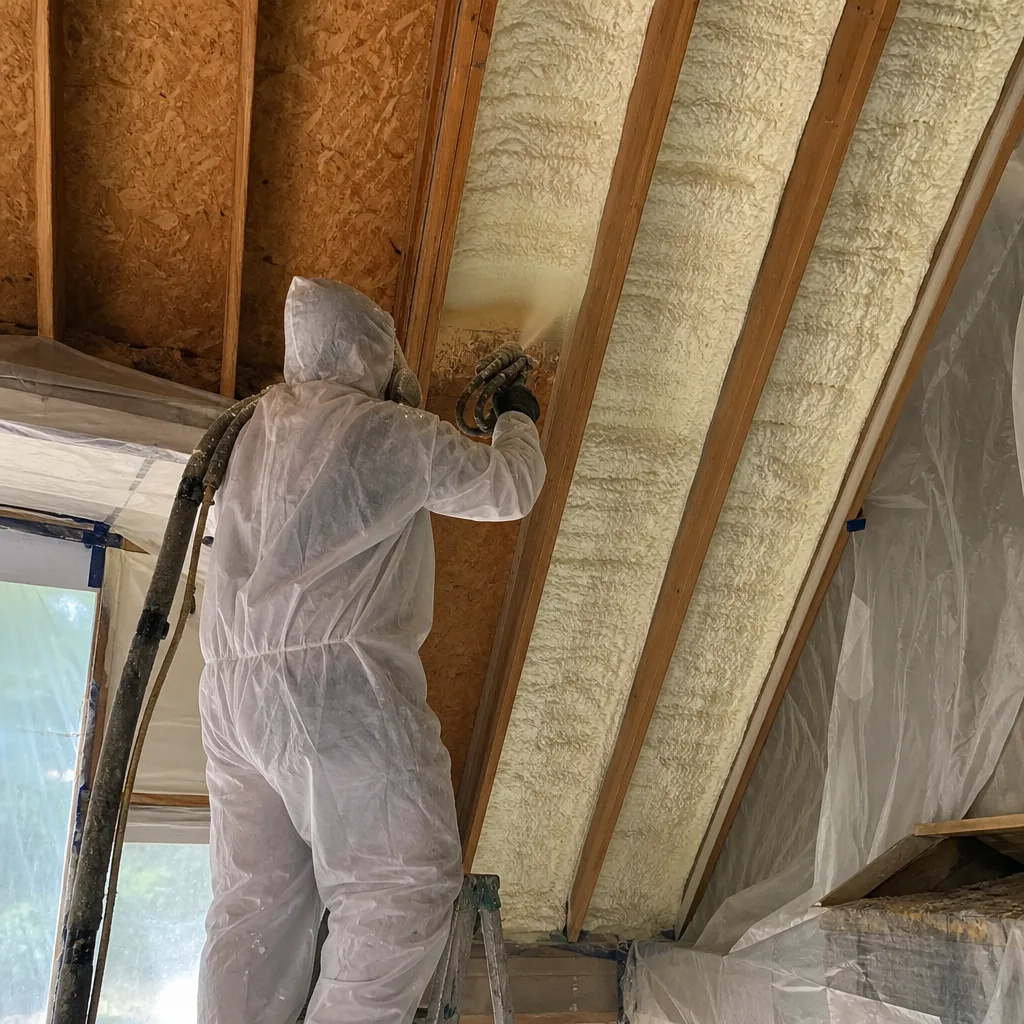
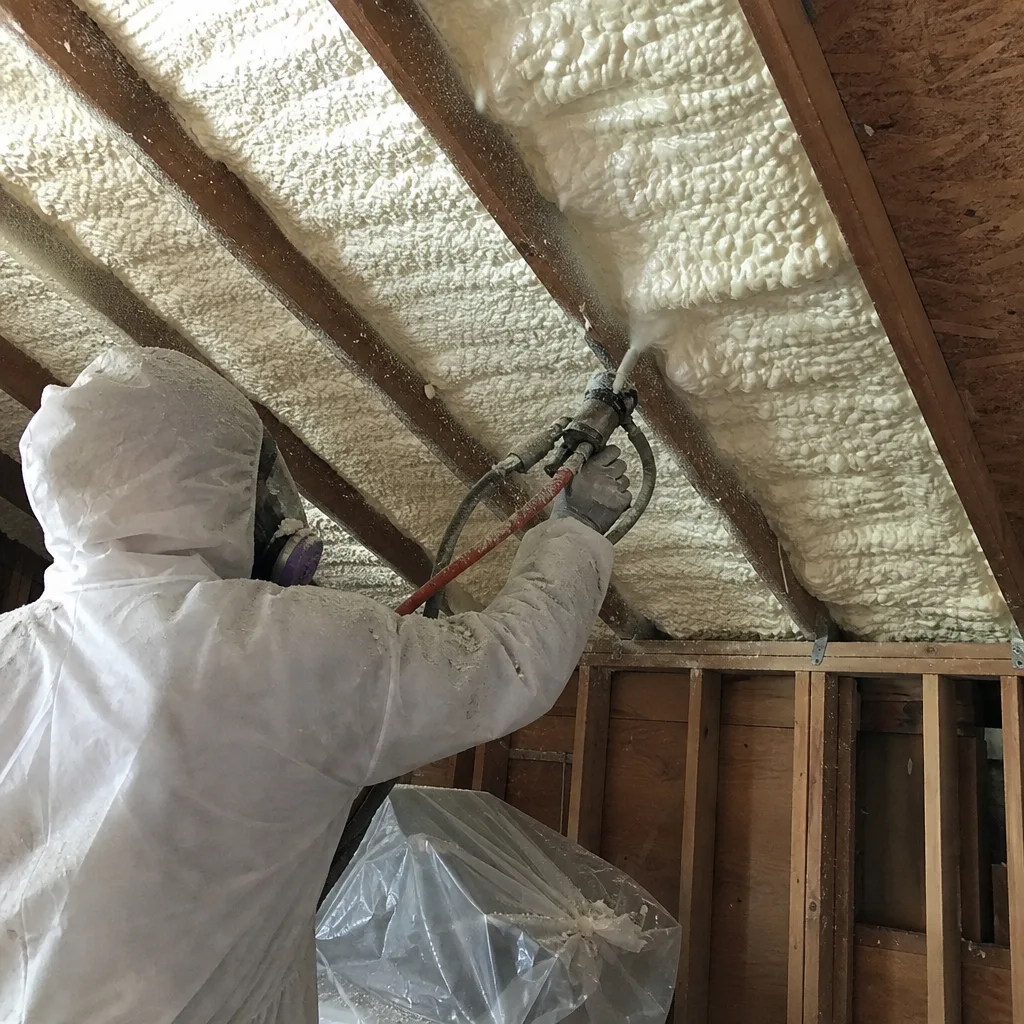
Spray foam earns its keep in Costa Mesa on homes where the stucco envelope traps humidity and standard vented-attic insulation keeps failing. Closed-cell foam creates an air and vapor barrier in one step, which is why we often recommend it for raised wood-framed floors and rim joists where crawl space moisture migrates up into living areas. Open-cell foam works well for sound control between attached townhome walls near South Coast Metro. Either way, the recommendation follows the job, not the other way around. Spray Foam Insulation in Costa Mesa explains the difference between open-cell and closed-cell, and where each makes sense in this climate.
What happens when you call
- 1
A real person answersNo phone trees — you reach a local pro.
- 2
You get an upfront price rangeHonest numbers before anyone is dispatched.
- 3
A background-checked tech heads outLicensed & insured, dispatched right away.
- 4
You approve before work beginsNothing starts until you say go.
Blown In Insulation in Costa Mesa
Blown in insulation is the workhorse solution for Costa Mesa’s post-war housing stock, because it fills the irregular cavities and hard-to-reach attic corners that old batts never covered well. In Costa Mesa specifically, the job is as much about removing saturated, failed insulation and air-sealing as it is about adding material; a fresh blanket of blown-in fiberglass or cellulose over a sealed attic floor is what finally evens out temperatures between rooms. That’s what we do most often in the 92627 ranch homes where the marine layer has done its damage. For a deeper look at how the method compares to batts and spray foam, our Blown In Insulation page covers the material options.
Cellulose Insulation
Signs you need it
Your attic insulation is thin, dusty, or settled below the tops of the floor joists, and upstairs rooms swing hot and cold while the thermostat fights to keep up.
What it costs in Costa Mesa
Blown-in cellulose in a typical Costa Mesa ranch attic runs $1.50 to $3.00 per square foot installed, depending on depth and prep work.
How we do it
We remove or level the old material, air-seal penetrations, and blow in GreenFiber cellulose to a consistent depth that hits your target R-value without blocking soffit vents.
Blown In Attic Insulation
Signs you need it
Rooms below the attic are noticeably hotter in summer than the rest of the house, and the existing attic insulation looks thin, patchy, or stained from past leaks.
What it costs in Costa Mesa
Blown-in attic insulation for a standard Costa Mesa single-story home falls between $1,200 and $2,800, depending on square footage and whether old material needs to be pulled first.
How we do it
We start with an attic inspection and moisture check, seal top-plate and wire penetrations, then blow insulation to a uniform depth across the entire attic floor.
Loose Fill Insulation
Signs you need it
Your attic has batt insulation that’s been pulled up and left uneven during rewiring or AC work, leaving bare spots and air leaks that show up as hot and cold patches.
What it costs in Costa Mesa
Loose fill insulation in Costa Mesa generally runs $1.50 to $3.50 per square foot installed, which covers both fiberglass and cellulose options at typical attic depths.
How we do it
We level the existing material or start fresh, then blow loose fill into every odd-shaped bay and corner, making sure the depth is consistent even around roof bracing and wiring.
What Blown In Insulation Costs in Costa Mesa
| Item | Typical range in Costa Mesa |
|---|---|
| Blown-in fiberglass attic, standard 1,200 sq ft ranch | $1,800 – $3,400 |
| Blown-in cellulose attic, same footprint | $2,000 – $3,800 |
| Attic prep and air-sealing (penetrations only) | $300 – $700 |
How long does blown in insulation last in a Costa Mesa attic?
Blown-in fiberglass and cellulose both hold their R-value for 20 to 30 years in a dry attic, but Costa Mesa’s marine-layer humidity shortens that timeline if the attic isn’t ventilated properly. Moisture is what breaks down the material, not age.
Is blown in insulation worth it for a Costa Mesa house with no AC?
Yes, and it’s one of the best money fixes we see. An insulated attic slows heat gain through the ceiling, which keeps the whole house noticeably cooler in July and August even without air conditioning. Call for a free estimate and we’ll tell you honestly if your attic is a candidate.
Brands We Service in Costa Mesa
We install Owens Corning and Johns Manville fiberglass, GreenFiber cellulose, and Knauf batts in Costa Mesa attics, all stocked locally for quick turnaround. Our brands page explains why we carry each one, but the short version is that different Costa Mesa homes need different materials, and we keep all of them on hand.
Pricing for Insulation Company in Costa Mesa, CA
| Service | Typical range in Costa Mesa |
|---|---|
| Blown-in attic insulation, 1,200 sq ft ranch | $1,800 – $3,400 |
| Blown-in cellulose attic, same footprint | $2,000 – $3,800 |
| Attic air-sealing (penetrations only) | $300 – $700 |
| Batts in exterior walls (remodel strip-out) | $0.80 – $1.60 per sq ft |
| Mineral wool batts (Rockwool) | $1.85 – $2.90 per sq ft |
| Crawl space rim/band joist air-seal | $900 – $2,000 |
| Open-cell spray foam, 2×4 wall cavity | $1.30 – $2.60 per sq ft |
| Closed-cell spray foam, 2×6 wall cavity | $2.50 – $4.25 per sq ft |
| Spray foam rim joist, existing crawl space | $5 – $9 per linear foot |
| Knee wall insulation (attic side) | $1.50 – $3.10 per sq ft |
What pushes price up in Costa Mesa is usually moisture-related prep: removing water-damaged batts, treating condensation-stained sheathing, or air-sealing a 1950s attic full of old penetrations. Every quote we give is upfront and line-itemed, so you’ll know the prep cost before any material goes in.
Neighborhoods We Serve in Costa Mesa
We work the full city, but the bulk of our Costa Mesa insulation jobs land in the older neighborhoods where the housing stock needs the most attention. Typical response time is same week for inspections across the city.
- Westside Costa Mesa (92627)
- Mesa Verde (92626)
- South Coast Metro (92626)
- Eastside Costa Mesa (92627)
- College Park (92626)
Service Area – Cities Near Costa Mesa
Welcome Insulation is based in San Joaquin Hills and covers the full coastal corridor from Costa Mesa outward. We also serve Newport Beach, CA, Fountain Valley, CA, Huntington Beach, CA, and San Joaquin Hills, CA. If you’re just outside Costa Mesa and wondering whether we’ll come out, call us and ask; the answer is almost always yes.
Serving Costa Mesa, CA — Our Local Coverage Area
We’re based in the Costa Mesa area and know this community well. Use the map below to see our service coverage — if you’re nearby, we can almost certainly help.
FAQs About Insulation Company in Costa Mesa
Most Costa Mesa inspections happen within two to three business days of your call. Emergency calls for a torn-open attic or exposed wall after a contractor left the job mid-way get priority. Call (855) 795-2118 and we’ll give you a real arrival window.
No, re-insulating an attic or exterior wall is exempt from Costa Mesa building permits as long as no structural changes are involved. If we find a condition that does need a permit, we’ll tell you before any work starts.
Yes. Many South Coast Metro townhome communities have CC&Rs that cover exterior work, but insulation inside an attic or wall cavity is typically interior and doesn’t require HOA approval. We’re also used to coordinating with HOA-referred vendors when the community does require documentation.
What happens when you call
- 1A real person answersNo phone trees — talk to a local insulation pro.
- 2You get an upfront price rangeHonest numbers before anyone is dispatched. No surprises.
- 3A background-checked tech heads outLicensed & insured, typically within 60-minute.
- 4You approve before work beginsNothing starts until you say go.
What Costa Mesa Customers Say
"Work is good and the house is noticeably more comfortable. There was insulation debris left in the hall closet under the attic access that I had to clean up."
— Keisha Jackson"Spray foam in the rim joists in the basement. The cold floors above them are gone."
— Danielle Schaefer"Installed baffles at the soffits so the new insulation didn't block the ventilation, which the previous contractor apparently never considered."
— Rafael Martinez