
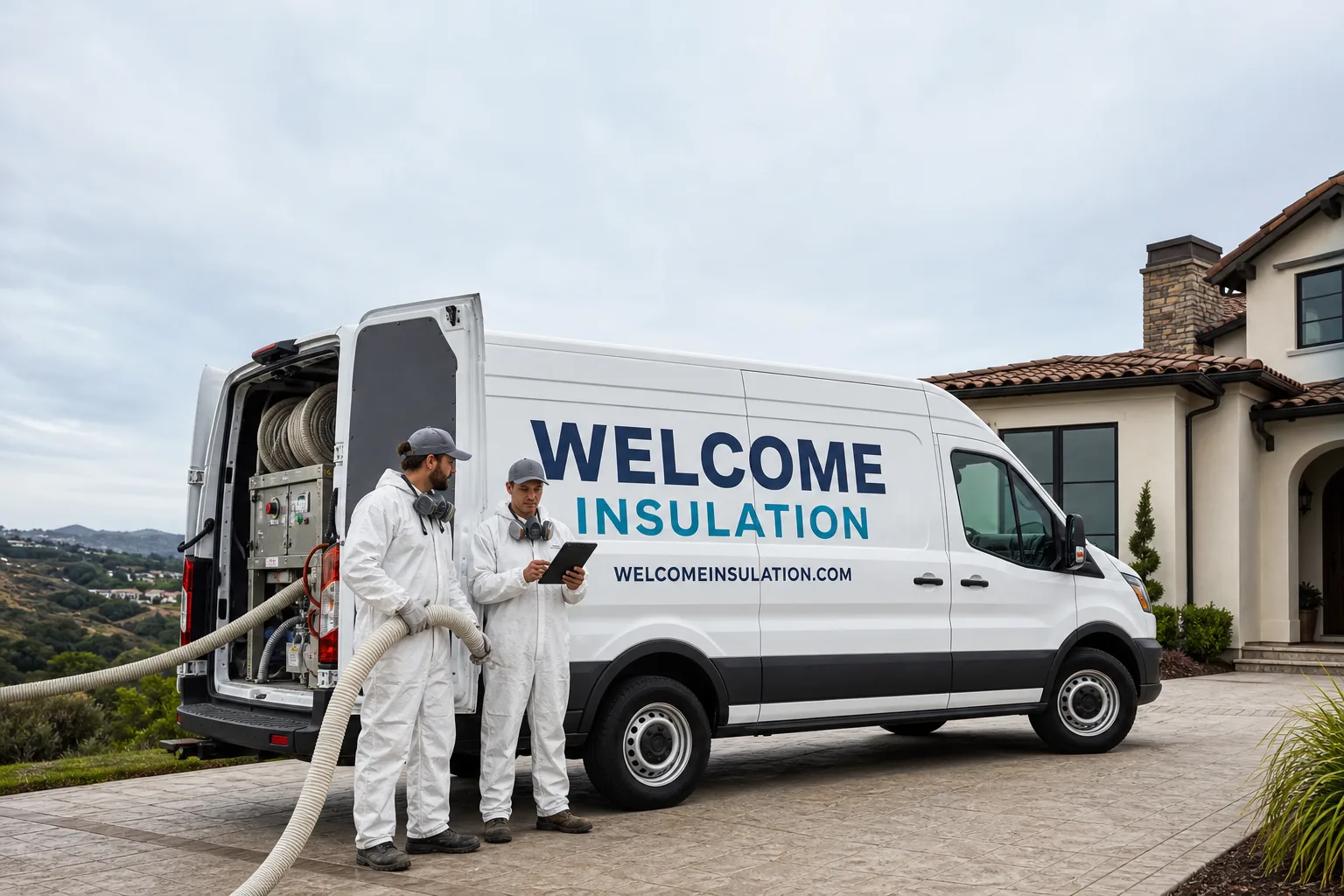
Fast, Reliable Attic Insulation Across Bellflower
Attic insulation in Bellflower isn’t a one-size-fits-all job. Most homes here were built in the 1950s and 60s, and the original fiberglass batts have settled, sagged, or disappeared entirely. That means your ceiling is doing almost nothing to stop summer heat from pouring into your living space. We’re Welcome Insulation, a dedicated insulation specialist serving Bellflower, and we’ve spent years opening attics across 90706 and 90707 that tell the same story: under-insulated postwar tract homes that need a real material fix, not a quick sales pitch. Call (855) 795-2118 for a free estimate, and we’ll tell you straight what your attic actually needs.
Why Welcome Insulation Is Bellflower’s Preferred Attic Insulation Company
Insulation is all we do. That matters in Bellflower because the housing stock here has very specific failure patterns. General contractors who install insulation on the side often miss what’s really going on in these attics: settled batts, crushed eave vents, unsealed top plates, and the occasional converted garage with bare stud cavities that never got a thermal barrier. Our crews see that every week. We know what the original 1950s construction looks like, where the air leaks hide, and which material actually belongs in a stucco-and-wood-frame Bellflower home.
Our reputation here comes from matching the material to the house. We install Owens Corning, Johns Manville, Knauf, Rockwool, CertainTeed, Icynene, Demilec, and GreenFiber. Eight brands across fiberglass, mineral wool, spray foam, and cellulose. When we recommend GreenFiber blown-in for a Bellflower attic, it’s because the loose-fill depth covers settled bays evenly. When we recommend Rockwool, it’s because the homeowner wants fire resistance and sound control alongside thermal performance. Ask us why we recommended one material over the other. We’ll explain it in plain English.
Ruben Ochoa leads our team, and he’s built our process around one principle: the job dictates the material, not the other way around. For Bellflower homeowners, that means no generic blow-and-go job. It means a plan that accounts for your home’s age, your attic’s ventilation, and whether that converted garage at the back of the lot was ever properly insulated.
Insulation Contractors in Bellflower
Insulation Contractors in Bellflower should know one thing before they step foot in your attic: a large share of the insulation work in 90706 sits above add-ons and garage conversions that were never permitted with proper thermal barriers. Our technicians regularly open attics over converted garages and find bare stud cavities with no insulation at all, and top plates that were never air-sealed. That’s not a simple blow-in job. That’s a re-insulate-and-air-seal project that requires knowing where the old garage door header meets the ceiling line, where the penetrations leak, and how to bring the whole assembly up to a consistent R-value.
For a typical Bellflower postwar tract home, attic insulation runs between $1,800 and $4,200 depending on square footage, existing material removal, and air sealing scope. Attic insulation top-up on a home that just needs depth added usually falls between $900 and $1,800. Radiant barrier installation adds $600 to $1,500 depending on attic size and roof pitch.
Blown-In Attic Insulation and Top-Ups
Most Bellflower homes from the 1950s and 60s had thin original batts that have now settled to half their intended depth. Blowing in GreenFiber cellulose or Johns Manville fiberglass loose-fill over the existing layer is often the fastest, most effective fix. It fills the bays completely, covers the top plates, and brings the ceiling assembly to a consistent R-38 or better.
Attic Insulation Replacement
When the original batts are compressed, rodent-soiled, or full of dust from sixty years of attic heat, replacement is the right call. We remove the old material, air-seal the top plates and penetrations, then install fresh batts or loose-fill matched to your ceiling assembly. For homes with converted garages, replacement usually includes sealing the gaps where the old garage door header meets the framing.
Attic Ventilation in Bellflower
Attic Ventilation in Bellflower is the difference between an attic that vents 140°F summer heat and an attic that bakes it into your ceiling assembly. The original 1950s and 60s tract homes here often have undersized or crushed eave vents, missing ridge vents, or no ridge vents at all. When attic temperatures climb past 140°F in July and August, that trapped heat radiates through the ceiling insulation into your living space. Even a well-insulated attic underperforms if the ventilation can’t move hot air out.
Ventilation work in Bellflower typically runs $450 to $1,400 depending on whether we’re adding ridge vent, replacing crushed eave baffles, or both. Homes over converted garages frequently need baffles installed for the first time, since the original builder never vented what was then an unconditioned garage space.
Eave and Ridge Ventilation Repairs
Crushed eave baffles from a bad re-roof or decades of settling block air intake at the soffit line. We install new baffles to keep insulation from blocking airflow, then add or replace ridge vent at the peak so the attic breathes top to bottom. This is the single most overlooked part of a Bellflower attic upgrade.
Radiant Barrier for Summer Heat Gain
Radiant barrier stapled to the underside of the roof deck reflects a significant share of the radiant heat that would otherwise soak into your insulation. In Bellflower’s inland-adjacent climate with long hot summers, this is often the highest-impact dollar you can spend on an attic. We install Owens Corning radiant barrier and see back rooms and converted additions hold temperature noticeably better after installation.
Trusted Brands We Service in Bellflower
We install Johns Manville because their loose-fill fiberglass gives consistent coverage across irregular attic bays. We install Knauf because their batt products hold their R-value in the tight stud cavities common in Bellflower’s original wall framing. We install Rockwool because its mineral wool batts offer fire resistance and sound control that fiberglass can’t match, and CertainTeed because their blown-in products perform well in the hot attic conditions we see across southeast LA County. When our Bellflower customers need specific materials matched to their home’s failure mode, we can pull from an eight-brand roster instead of pushing whatever is on the truck. For spray foam applications like sealing gaps around a converted garage header, we install both Icynene and Demilec systems, and we’ll recommend open-cell or closed-cell based on the specific air-sealing need. Insulation is all we do, and that means our Bellflower customers get the material that actually fits the problem, not the material that fits the inventory.
Common Attic Insulation Problems We See in Bellflower Homes
- Settled and sagging original batts. The fiberglass batts installed in the 1950s and 60s have compressed over decades of heat cycling. In Bellflower’s hot summer attics, the material breaks down and leaves the top plates and ceiling edges nearly bare, which is where most heat transfer happens.
- Attics over unpermitted garage conversions with no insulation. In 90706, we frequently open attics above converted garages and add-on rooms to find bare stud cavities with zero insulation. These spaces were built decades ago without permits or thermal barriers, and they become the hottest rooms in the house every summer.
- Missing or crushed eave and ridge ventilation. Original 1950s ventilation was minimal to begin with. Sixty-plus years of re-roofing, debris, and settling means most Bellflower attics can’t move hot air out. That trapped heat soaks into the ceiling assembly and pushes your AC to work harder than it should.
- Unsealed top plates and penetrations. The gap between drywall and framing at the top of interior walls leaks conditioned air into the attic year-round. On older Bellflower homes, these gaps were never sealed at construction, and every duct boot, wire, and pipe penetration adds another leak. We air-seal these as part of almost every attic insulation job here.
Pricing for Attic Insulation in Bellflower, CA
A typical attic insulation job in Bellflower runs between $1,800 and $4,200 for a standard postwar single-story home of 1,000 to 1,500 square feet. Blown-in attic insulation top-up on a home that already has some material runs $900 to $1,800. Attic insulation replacement, which includes removing old batts and air-sealing before reinstalling, starts around $2,500 and goes up from there if we’re also correcting ventilation or adding radiant barrier. Homes with converted garages or add-ons with no existing insulation typically land at the higher end, since we’re often insulating a space that was never prepped for it. Attic baffles and ventilation prep add $450 to $1,400 depending on scope. Every job gets a free on-site estimate, and we’ll walk through the exact line items with you before any work begins. Call (855) 795-2118 to schedule a look.
We Also Serve Cities Near Bellflower
Welcome Insulation serves homeowners across southeast LA County, including Bellflower and the surrounding communities of Paramount, Norwalk, Artesia, and Cerritos. If you’re in a neighboring city and your attic shows the same postwar-era warning signs, the same crew and the same eight-brand material roster are available. Schedule a free estimate by phone and we’ll come out.
Serving Bellflower, CA — Our Local Coverage Area
We’re based in the Bellflower area and know this community well. Use the map below to see our service coverage — if you’re nearby, we can almost certainly help.
FAQs About Attic Insulation in Bellflower
Most 1950s Bellflower tract homes need R-38 to R-49 at the ceiling, which typically means 12 to 16 inches of blown-in loose-fill or a combination of new batts over air-sealed top plates. The original batts installed at construction were usually R-11 or less, and after decades of settling they perform far below even that. We measure what’s there, identify the gaps, and bring the whole attic to a consistent depth rather than just adding a layer on top. Call (855) 795-2118 for a free attic inspection and exact recommendation.
Because the space above it was never insulated or vented. Most converted garages in 90706 were built without permits and without thermal barriers, so the ceiling assembly above those rooms has bare studs, open penetrations, and no ventilation path. In a Bellflower summer, attic temperatures above that space climb well past 140°F, and all of that heat radiates straight down into the room. Insulating and air-sealing that attic area typically brings the converted garage to the same comfort level as the rest of the house. Call (855) 795-2118 and ask about an attic inspection above your conversion.
Yes, in most cases. Bellflower’s inland-adjacent climate means long hot summers with attic temperatures consistently exceeding 140°F, and a radiant barrier stapled to the roof deck reflects a significant share of that heat before it ever reaches your insulation. For single-story postwar homes with dark-shingled roofs and limited ridge ventilation, the comfort improvement in back rooms is often noticeable within the first week. It’s not a replacement for proper insulation depth, but it works alongside it. Call (855) 795-2118 for a radiant barrier quote.
We start by checking the existing eave baffles and ridge vent, because most 1950s and 60s Bellflower homes have crushed or missing baffles and no functional ridge vent at all. We install new baffles to keep blown-in insulation from blocking the soffit line, then add or repair ridge vent at the peak so hot air actually moves out. The fix usually runs $450 to $1,400 depending on what’s already there. Proper ventilation extends the life of your insulation and keeps your ceiling from baking in July. Call (855) 795-2118 to schedule an assessment.
Yes, and this is actually one of the most common jobs we do in Bellflower. We insulate and air-seal attics above unpermitted garage conversions and add-ons all the time. We’re not code enforcement, and we don’t need to see permits to do the work. What we do is identify the bare stud cavities, seal the top plates and penetrations, and install the right material for the space, usually blown-in cellulose or fiberglass with a radiant barrier if the heat load calls for it. The result is a room that finally holds temperature. Call (855) 795-2118 and describe your setup; we’ll tell you exactly what it needs.
We’re Welcome Insulation, a dedicated Attic Insulation specialist serving Bellflower and the surrounding southeast LA County communities. On a postwar tract block off Bellflower Boulevard in 90706, our crew opened an attic above a converted garage and found bare studs with zero insulation and gaps where the old garage door header met the ceiling line. We air-sealed the top plates and penetrations, blew in GreenFiber loose-fill to a consistent depth across the joists, and stapled Owens Corning radiant barrier to knock down the summer heat load. The homeowner’s back rooms, previously the hottest in the house, now hold temperature with the rest of the single-story floor plan. That’s the work we do in Bellflower every week. If your attic has settled batts, a hot converted addition, or ventilation that hasn’t worked in decades, call (855) 795-2118 for a free estimate. We’ll tell you straight what your attic needs and what it costs.
Written by Ruben Ochoa, Owner at Welcome Insulation, serving Bellflower since day one.