
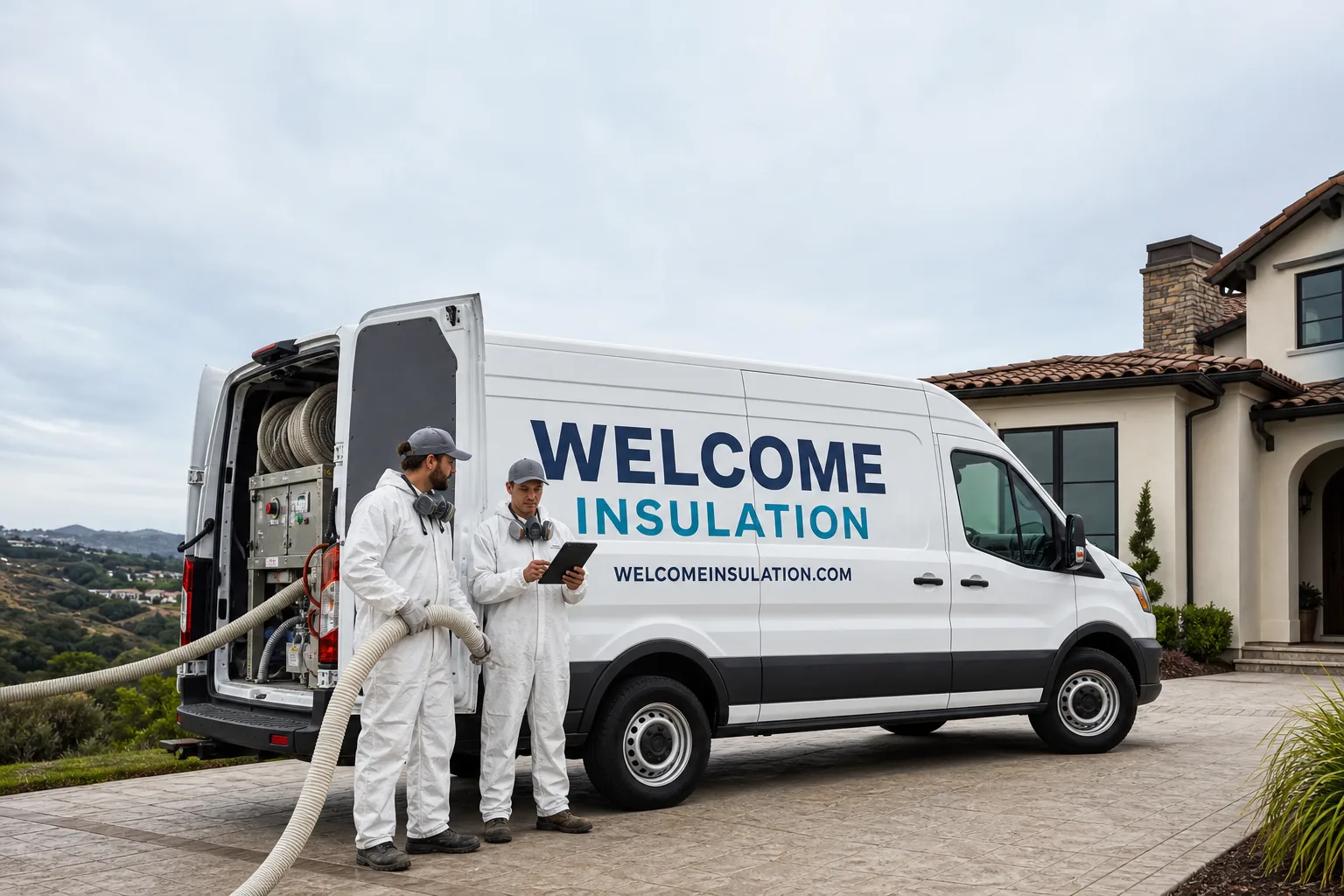
Fast, Reliable Attic Insulation Across Bell
Attic insulation in Bell typically runs $1,800 – $4,200 for a full retrofit on a 1920s – 1950s bungalow, with most jobs completed in a single day. That range covers removal of old material, air sealing, and new blown-in or batt insulation. If your attic has settled rock wool or degraded cellulose packed into an 18 – 24 inch peak, the job starts with careful removal, not just adding more on top. Call (855) 795-2118 and we’ll take a look. Our crews know Bell’s north-side tracts, the tight alley access, and the plaster-wall homes along Gage and Florence Avenues better than any out-of-town contractor.
Welcome Insulation is an Attic Insulation specialist. That’s the whole business. We don’t do plumbing, HVAC, or roofing. We install attic insulation, spray foam, and blown-in material from eight manufacturers, which means we pick the product that fits your Bell house, not the one we happen to have on the truck.
Why Welcome Insulation Is Bell’s Preferred Attic Insulation Company
Bell homeowners call us because the houses here demand a different approach than newer construction. Most homes in the 90202 zip code were built between the 1920s and 1950s. That means lath-and-plaster walls, low attic peaks, and wiring methods that generalist crews don’t always recognize. We do. Our installers spend every working day inside attics like yours, and they know what a 20-inch peak feels like when you’re on your knees in a Tyvek suit.
Ruben Ochoa runs the crew. He’s been the one answering calls from Bell residents who’ve had other companies say the attic is too tight to work in, or that the knob-and-tube wiring makes the job impossible. It’s not impossible. It’s slower, more careful work, and it’s what we’re set up to do.
Response time to Bell from our San Joaquin Hills base is usually under 90 minutes for an estimate visit. Same-day service is available on most attic insulation jobs in Bell once we’ve seen the space and confirmed access. We carry materials for the specific housing stock here, including GreenFiber cellulose for old attics where loose-fill makes better sense than batts.
We’re Bell‘s insulation contractor, and insulation is all we do. That focus means we’re not splitting attention between three trades. It also means we can take on the cramped, awkward attic spaces that other companies skip.
Attic Ventilation in Bell
Attic Ventilation in Bell is more critical than most homeowners realize, because the marine layer that rolls in off the Los Angeles coastal plain each morning doesn’t just cool the neighborhood down. It pushes moist air into attic spaces, where it condenses against the underside of the roof decking. In a 1920s stucco bungalow with original wood framing, that trapped moisture leads to sagging decking, rusted fasteners, and eventually mold on the plaster ceiling below. Proper ventilation is the fix. Without it, new insulation can actually make the moisture problem worse by holding damp air in place.
When a Bell homeowner sees morning condensation on bedroom ceilings, or notices that the attic smells musty even in the dry summer months, ventilation is usually part of the conversation. We install ridge vents and soffit vents as part of most retrofit jobs here, not as an add-on. Cost for adding proper attic ventilation to a Bell home runs $600 – $1,400 depending on the roofline and number of vents required.
Marine-Layer Moisture Control
The coastal air in Bell doesn’t bring the extreme heat of the Inland Empire, but it brings humidity that most of Los Angeles County doesn’t think about. A ridge vent paired with properly cleared soffit intake lets that moisture escape before it settles into the insulation or the wood decking. In homes along the older tracts north of Florence Avenue, we regularly upgrade the venting when we remove degraded old rock wool, because that material has often been holding moisture against the roof sheathing for decades.
Ventilation Before You Insulate
If you’re adding new insulation to a Bell home that has never had a proper vent system, do that first. Blowing new cellulose into an unvented attic here is like sealing a damp basement without a dehumidifier. The material does its thermal job, but the moisture problem gets trapped beneath it. We’ll inspect your roof and tell you honestly whether you need ventilation work before insulation, and what that adds to the total job cost.
Radiant Barrier in Bell
Radiant Barrier in Bell works differently than insulation, and in this city it’s a smart addition for single-story homes with south-facing roof slopes along streets like Bear Avenue and Woodward Avenue. A radiant barrier is a Reflectix repair in Bell-style reflective material, usually aluminum-faced, installed on the underside of the roof rafters. It reflects radiant heat from the sun back out through the roof before that heat ever reaches the attic floor or your living space. In Bell’s warm, dry summers, where afternoon sun beats down on stucco bungalows with little attic depth, a radiant barrier can cut the attic temperature by 20 – 30 degrees.
A radiant barrier install in a Bell home typically runs $1,200 – $2,600, depending on attic size and rafter configuration. That’s separate from insulation, and the two work well together. Insulation slows conductive heat transfer. The barrier handles radiant heat. For homes where the upstairs rooms or back bedrooms face the afternoon sun, we often recommend both in the same visit.
Low-Clearance Attic Application
Radiant barrier installation in an 18 – 24 inch peak is physically demanding work. It requires a technician who can move carefully in a crouch or on knees, using hand tools where a standard staple gun won’t fit. Our crews do this regularly in Bell. We don’t send a generalist who’s never worked in a space that tight and expects to stand upright all day. The material gets installed properly, with air gaps left where they need to be, even in the far eaves.
Summer Heat Gain in Bell Bungalows
Bell sits in a coastal plain, but by July and August the afternoons get hot enough that your air conditioner is fighting direct solar gain on the roof. A radiant barrier solves that before it becomes an indoor problem. Homeowners tell us the rooms that used to feel warm by 4 p.m. hold steady after a barrier and insulation are combined. Ask us why we recommended a barrier over additional insulation for your specific roof orientation. We’ll walk you through the math in plain English.
Trusted Brands We Service in Bell
We install Johns Manville batts, Rockwool mineral wool, and Knauf fiberglass in Bell homes, plus GreenFiber cellulose for low-clearance attic retrofits where loose-fill makes more sense than dragging batts through an 18-inch peak. Johns Manville batts give us a clean, consistent R-value per inch for low attics where space is at a premium. Rockwool is our go-to when a Bell homeowner wants fire resistance and sound control alongside thermal performance, which matters on dense lots where houses sit close together. We keep common sizes ready for Bell jobs, so we’re not making supply runs across town when a job is already underway. That means faster completion and less downtime for you.
Common Attic Insulation Problems We See in Bell Homes
- Buried knob-and-tube wiring under old insulation. In the 1920s – 1950s tract homes that dominate Bell, live knob-and-tube wiring is often hidden beneath settled rock wool or cellulose. Blowing new insulation directly over it creates a real fire risk, which is why we remove old material by hand around the wiring and check the circuits before any new insulation goes in.
- Marine-layer moisture trapped in plaster walls. Bell’s morning humidity seeps into attics and wall cavities, especially in older bungalows without vapor barriers. Insulation without air sealing and ventilation makes that moisture problem worse, leading to damp ceilings and musty air in the back rooms.
- Attics too low for standard equipment. A 20-inch peak doesn’t leave room for bulk equipment or upright work. Crews without experience in Bell’s older homes often give up on the far eaves or decline the job entirely. We’re used to working in those spaces and getting full coverage.
- Settled and degraded original material. The old cellulose or rock wool installed decades ago in Bell attics has usually compacted to half its original depth. That means an attic that looks insulated on paper is doing almost nothing. The fix is removal first, air sealing, then new material installed to the right depth.
Pricing for Attic Insulation in Bell, CA
A straightforward blown-in cellulose retrofit in Bell, without removing hazardous old wiring, typically runs $1,800 – $2,700 for a bungalow around 1,000 – 1,200 square feet. Full removal of old material, air sealing, and new insulation runs $2,600 – $4,200. Adding a radiant barrier to the underside of the roof decking adds roughly $1,200 – $2,600 depending on square footage and rafter spacing. Attic ventilation work runs $600 – $1,400. The biggest cost driver in Bell is access: homes with low peaks, tight alley-load garages, or knob-and-tube removal requirements take more labor hours, and that shows up in the estimate. Call (855) 795-2118 for a free written estimate. We price honestly up front, and we don’t surprise you with add-ons when the crew shows up.
We Also Serve Cities Near Bell
Welcome Insulation handles attic insulation work across Bell and into Cudahy, Maywood, Huntington Park, and Walnut Park. We’re familiar with the housing stock in all of these neighboring cities, and the same specialist approach applies. If you’re in one of those communities and need an honest assessment of your attic, call us at (855) 795-2118 or visit our Attic Insulation page for more details on how we work.
Serving Bell, CA — Our Local Coverage Area
We’re based in the Bell area and know this community well. Use the map below to see our service coverage — if you’re nearby, we can almost certainly help.
FAQs About Attic Insulation in Bell
Yes. An 18 – 24 inch peak is tight, but it’s standard for Bell’s older tract homes and we work in those spaces every week. We use blown-in cellulose for low attics because it fills irregular cavities without needing the headroom that batt installation requires. Call (855) 795-2118 and we’ll come see your attic before quoting.
We stop and assess before anything goes in. Knob-and-tube wiring generates heat where the wires pass through ceramic tubes, and covering it with insulation creates a fire hazard. In Bell homes where we find live knob-and-tube, we remove the old insulation by hand around the wiring and work with your electrician if updates are needed before new insulation is installed.
Because Bell’s marine layer pushes humid air into attics and wall cavities every morning, and in a 1920s – 1950s stucco bungalow without a vapor barrier, that moisture gets trapped. Air sealing the top plates, plumbing penetrations, and electrical boxes stops that humid air from entering in the first place. R-value measures heat resistance. It does nothing for air movement. In Bell, both matter equally. Call us and we’ll explain what your house actually needs.
Almost always, yes. The original venting on homes along Bell’s north-side tracts is often inadequate or completely blocked by old insulation. Adding ridge and soffit vents during an insulation retrofit is the smartest way to ensure the new material stays dry and effective. Expect $600 – $1,400 for ventilation work depending on the roofline.
We install GreenFiber cellulose, Johns Manville fiberglass batts, and Rockwool mineral wool in Bell homes, plus spray foam systems from Icynene and Demilec where the job calls for air sealing in tight wall cavities. For most low-peak attics with settled old material, blown-in GreenFiber is the practical choice. For homeowners who want fire resistance and sound dampening on a tight lot, Rockwool is a smart step up. Call (855) 795-2118 and we’ll recommend the right material for your specific attic.
Written by Ruben Ochoa, Owner at Welcome Insulation, serving Bell since day one.